AI Candidate Sourcing

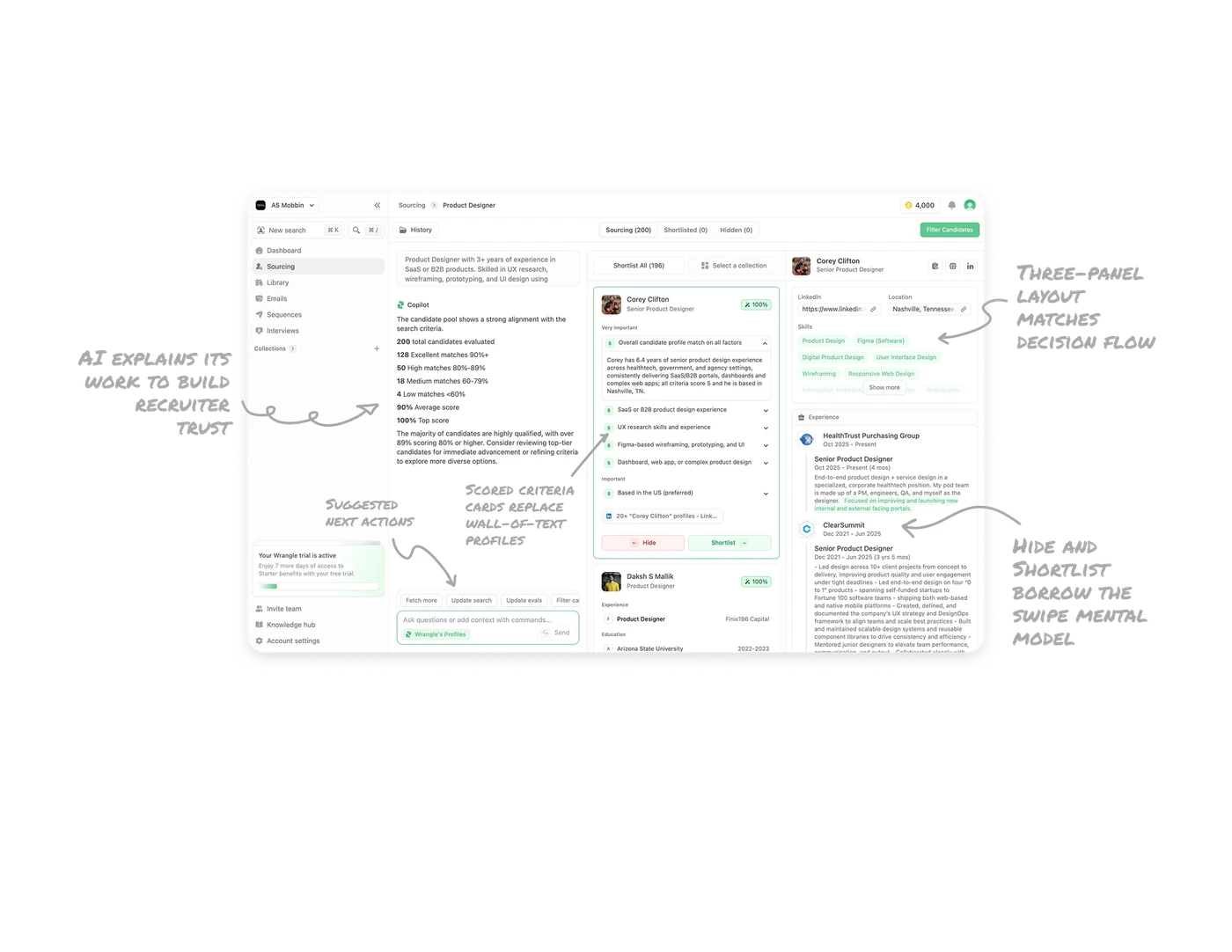
AI explains its work to build recruiter trust
The Copilot panel shows exactly how many candidates were evaluated, how they scored, and what the distribution looks like. This transparency turns the AI from a black box into a collaborator. Users who understand what the AI did are far more likely to act on its output than users who just see a list with no reasoning behind it.
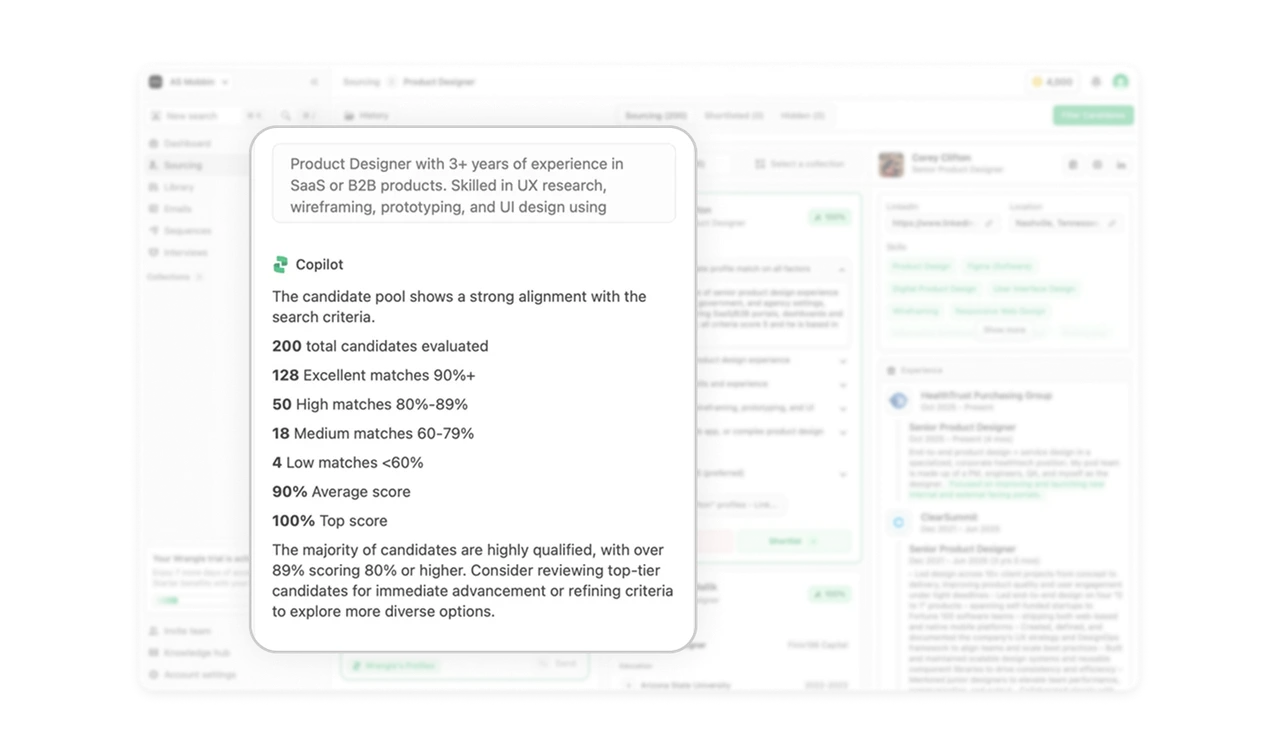
Scored criteria cards replace wall-of-text profiles
Each candidate card shows criteria scored 1 to 5 under Very Important and Important labels. Recruiters see at a glance where a candidate is strong and where they fall short without opening the full profile. Structured scoring turns a subjective review process into a scannable, comparable one that takes seconds instead of minutes per candidate.
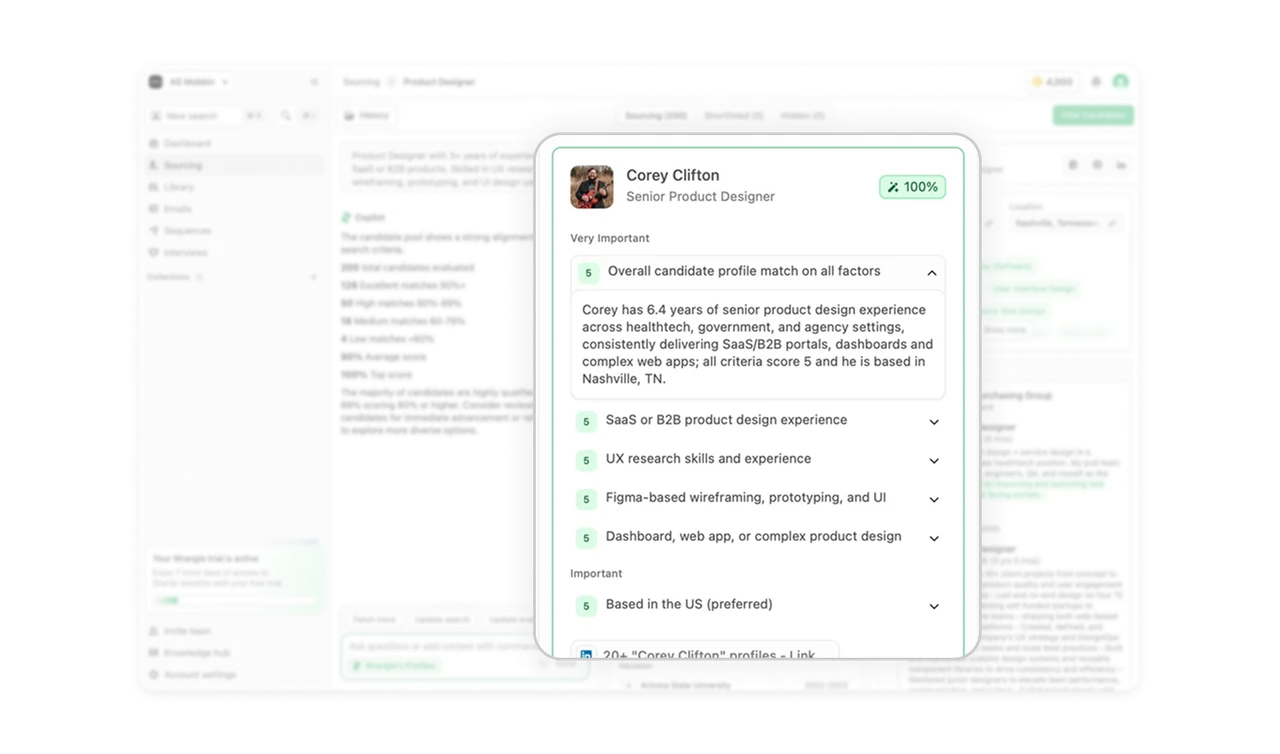
Three-panel layout matches the recruiter's decision flow
Left panel holds the AI summary and chat. Middle panel shows the candidate list. Right panel shows the full selected profile. This mirrors how recruiters actually think: run the search, scan the list, deep dive on promising candidates. The layout removes the need to navigate away at any step, keeping the entire decision in one view.
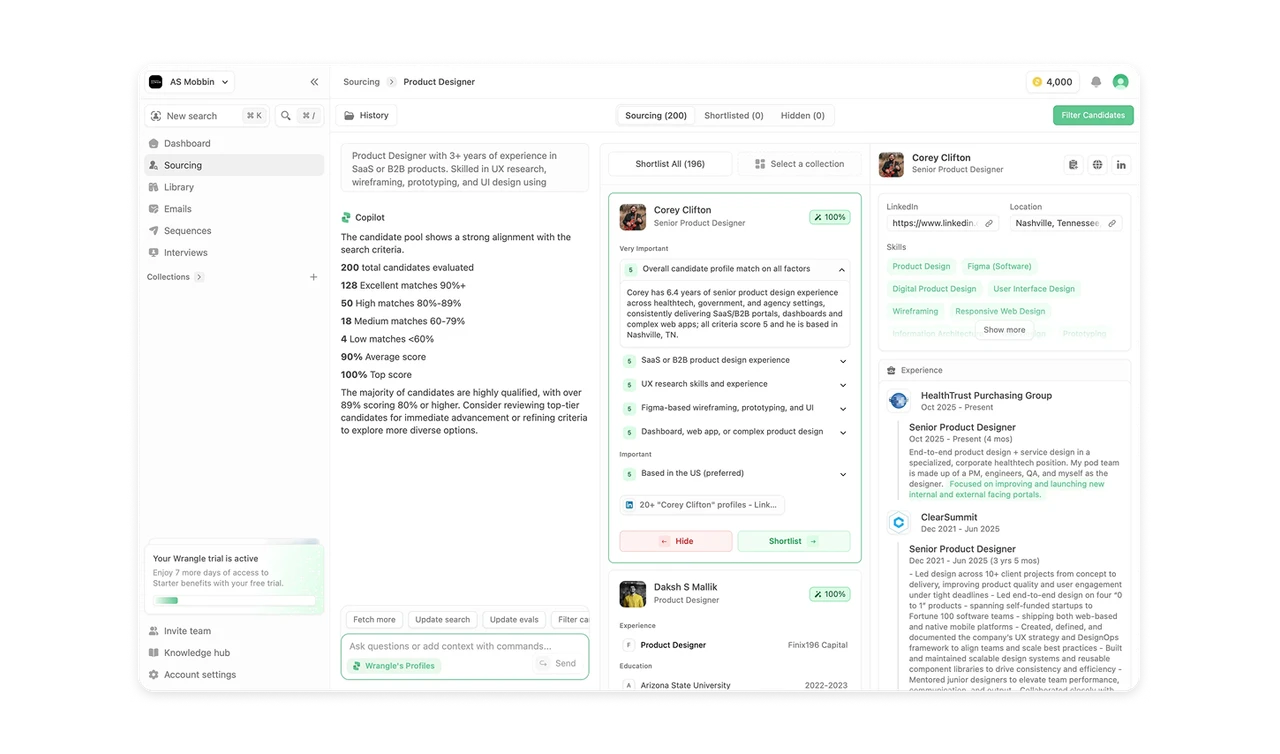
Suggested next actions reduce blank input anxiety
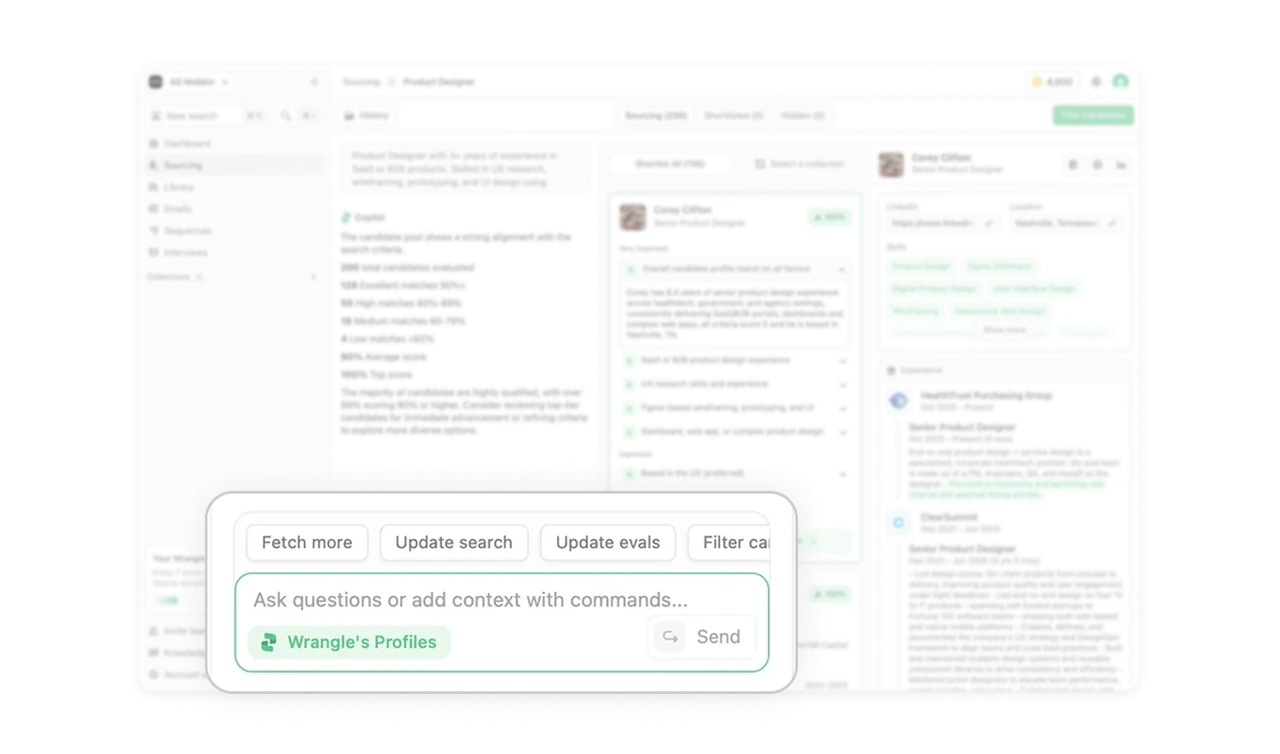
The chat input shows quick action chips like Fetch more, Update search, Update evals, and Filter candidates above the free-text field. New users do not have to guess what to type next. Power users can still go freeform. This pattern works in any AI product where the range of possible commands is wide and users need a starting point.
Hide and Shortlist borrow the swipe mental model
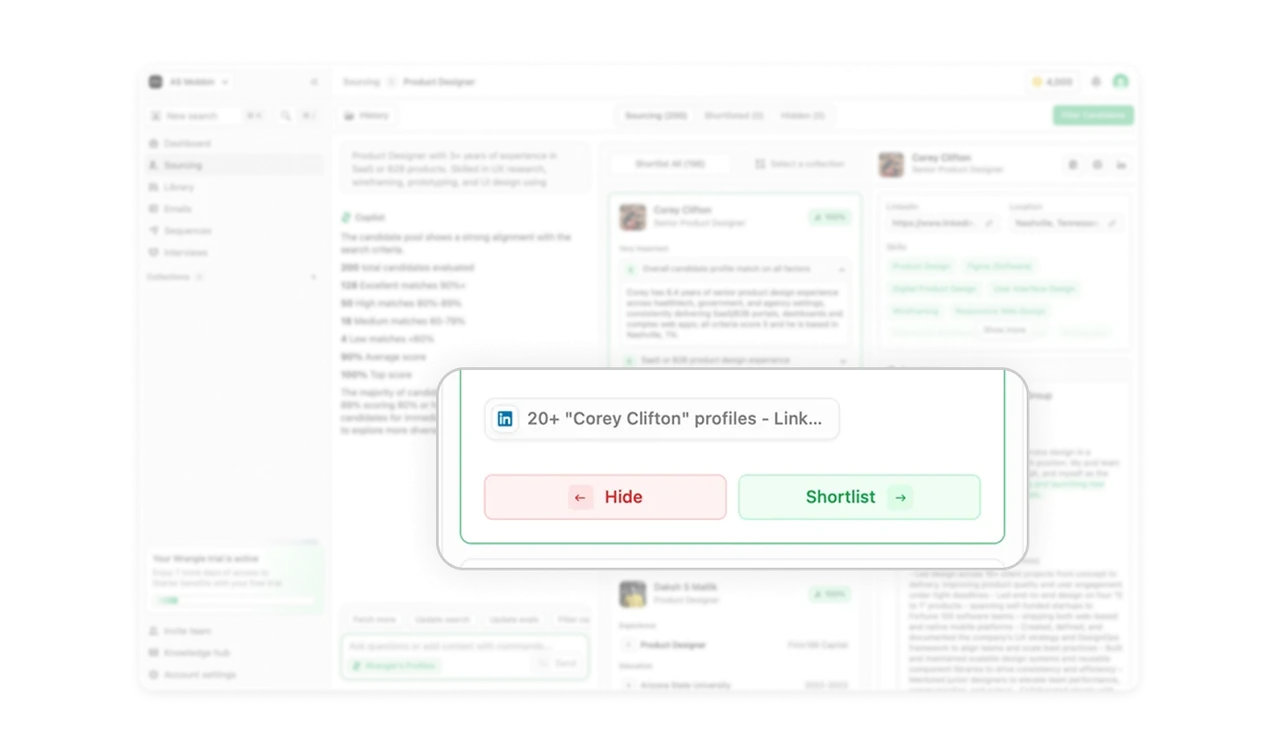
Two opposing actions at the bottom of each candidate card, red Hide on the left, green Shortlist on the right, mirror the left-right swipe pattern that millions already know from consumer apps. The directional color coding means users build muscle memory fast. A familiar interaction pattern in a B2B tool removes training time and makes high-volume reviewing feel effortless.
Similar Breakdown Lessons