Crypto Exchange Dashboard

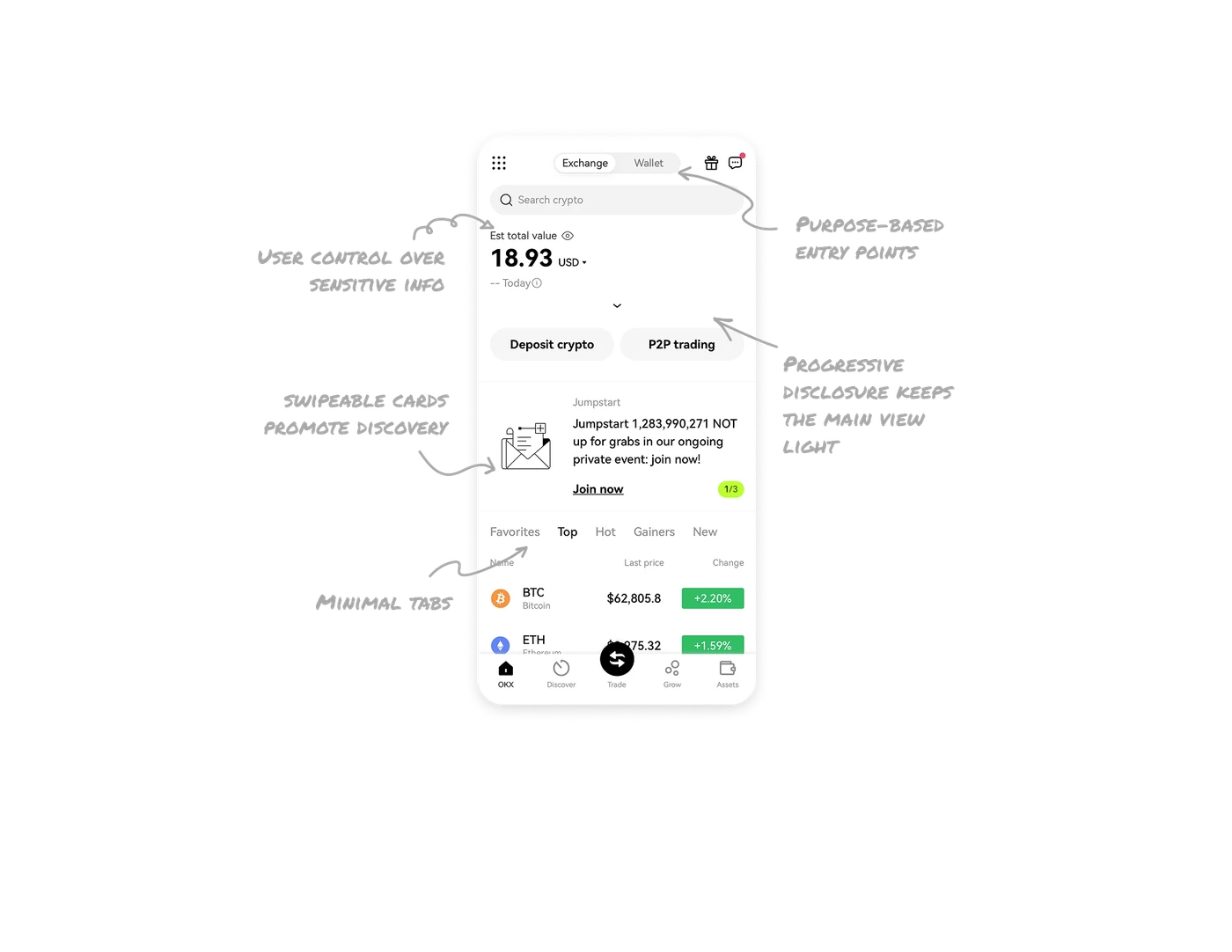
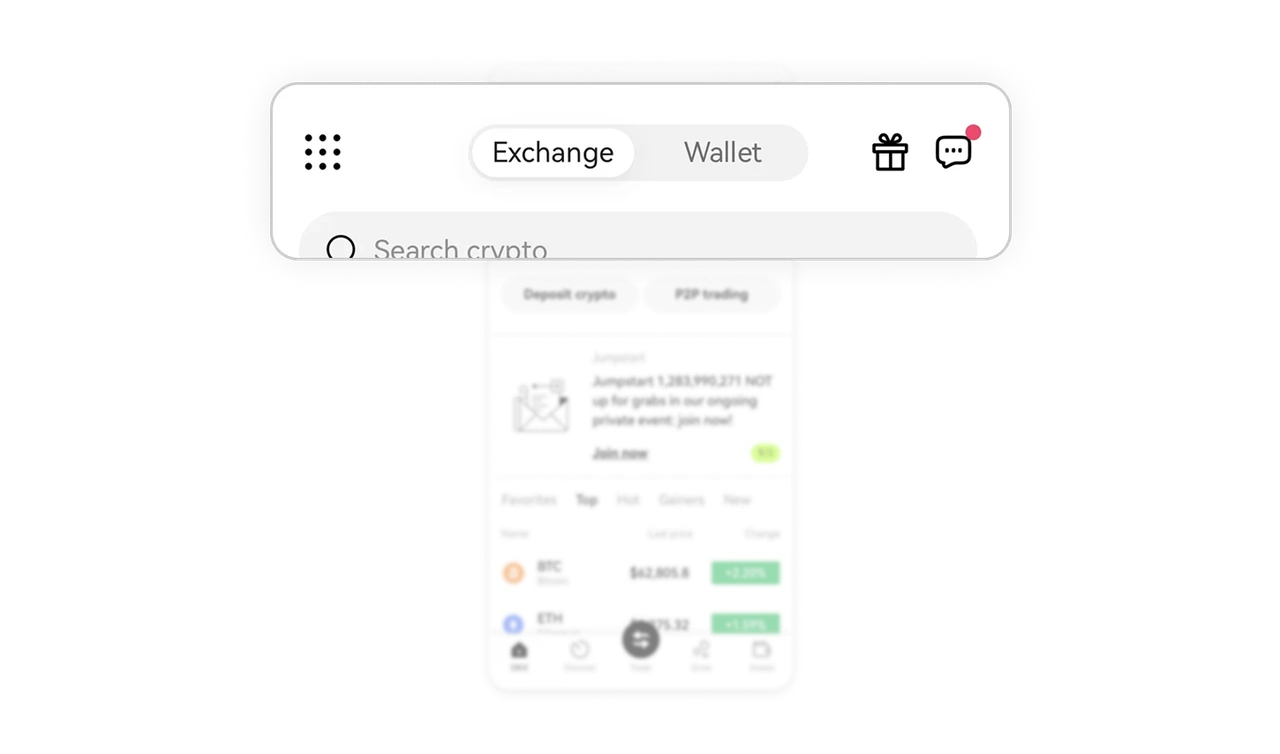
Purpose-based entry points clarify the user journey
The Exchange and Wallet tabs sit right at the top, letting users choose their intent before engaging with content. Trading and asset management stay clearly separated, which prevents mental switching and confusion.
User control over sensitive information builds trust
The dashboard allows users to hide their total balance and switch currencies inline. This protects privacy in public spaces and removes the need to leave the app just to do a value conversion.
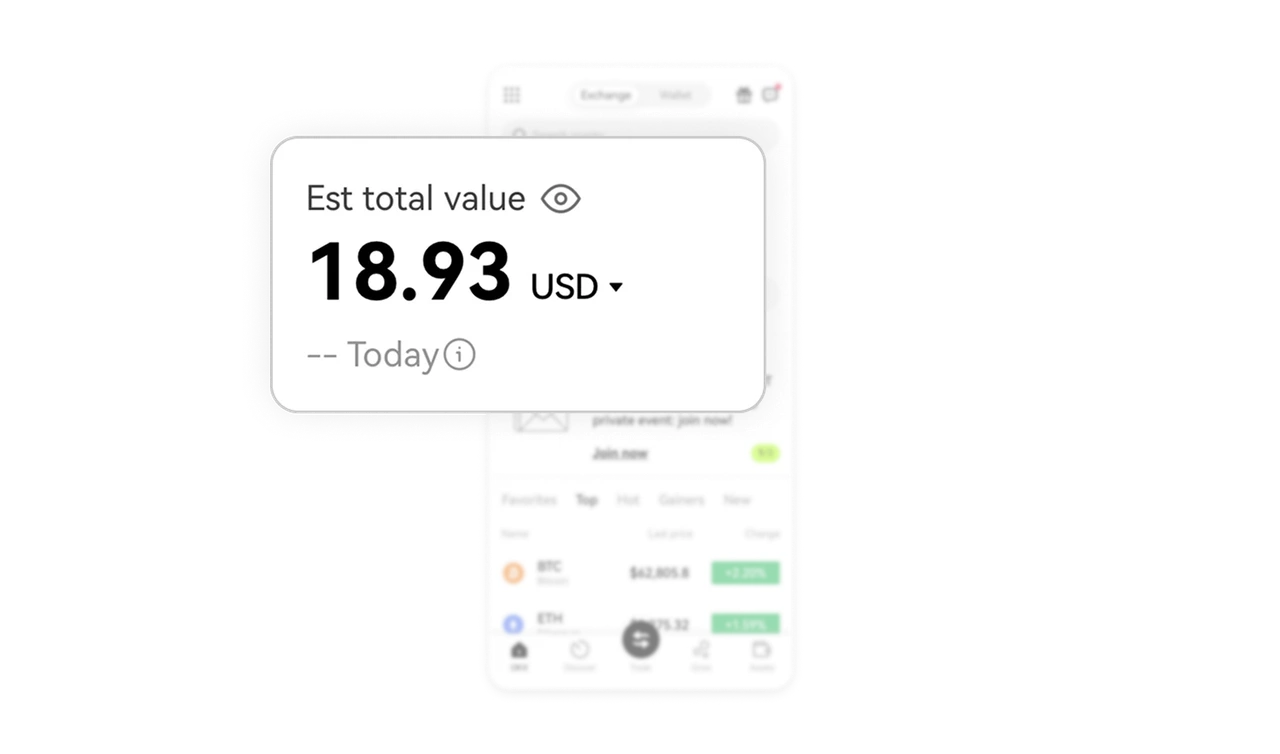
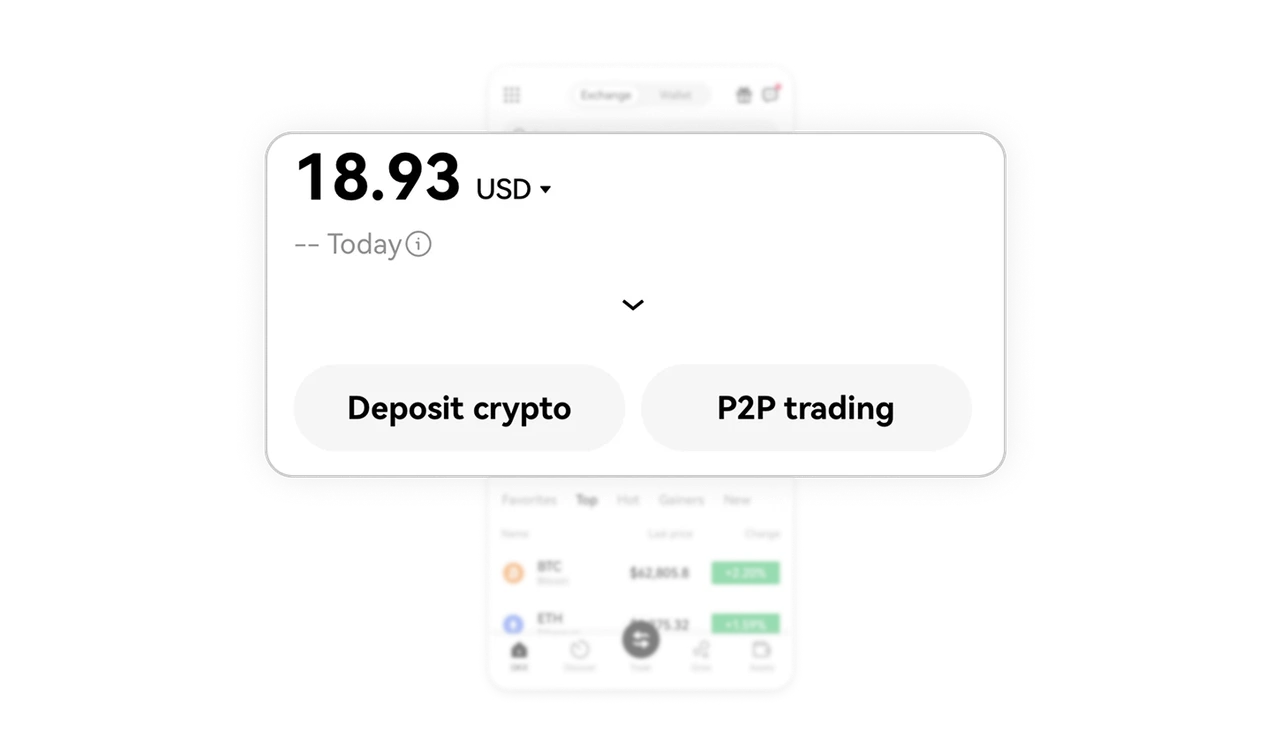
Progressive disclosure keeps the main view light
Secondary actions, such as depositing crypto and P2P trading, use muted styling, so they are available without competing for attention. The small arrow indicates that more details are available, revealing historical data only when the user requests it.
Swipeable cards promote discovery without disruption
Event and promotion cards sit below primary actions and can be swiped through at the user’s pace. They inform without blocking core tasks or breaking focus.

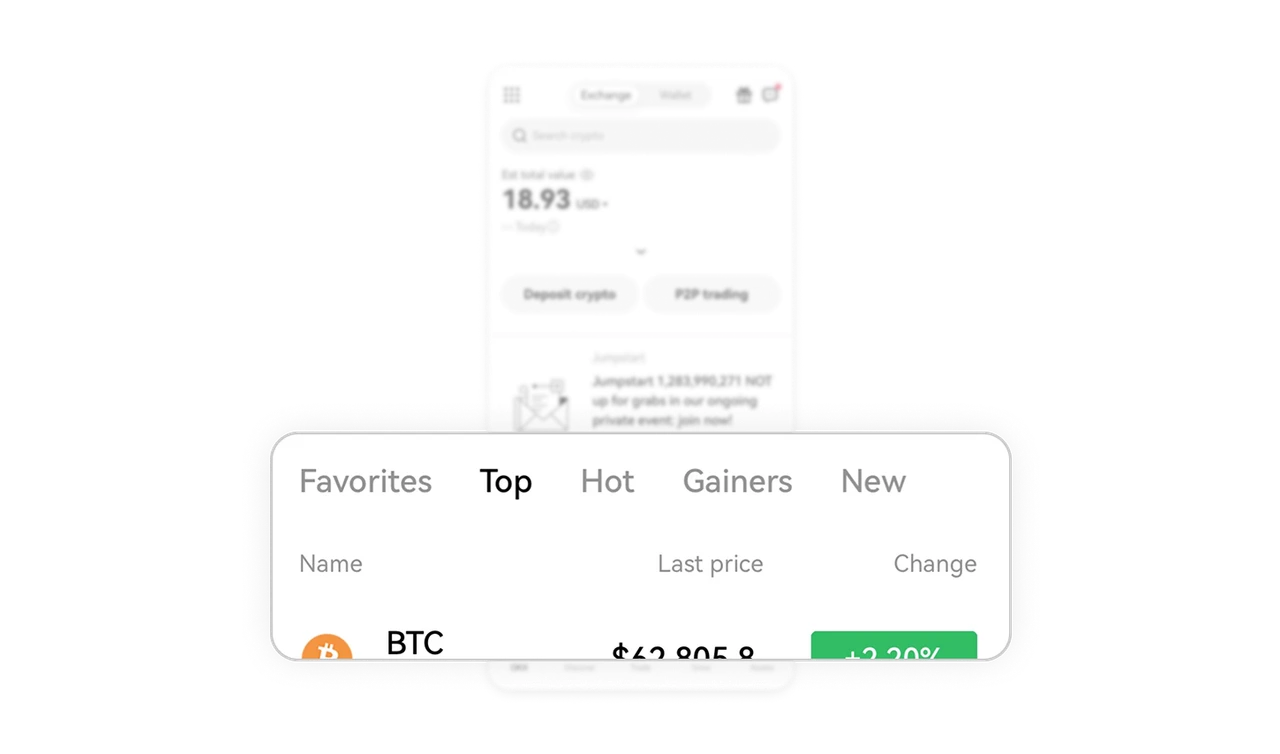
Minimal tabs make large datasets feel manageable
The Favorites, Top, Hot, Gainers, and New tabs act as fast filters instead of separate pages. One tap reshapes the content, helping users find relevant crypto quickly without visual noise.
Similar Breakdown Lessons