Marketing Landing Page

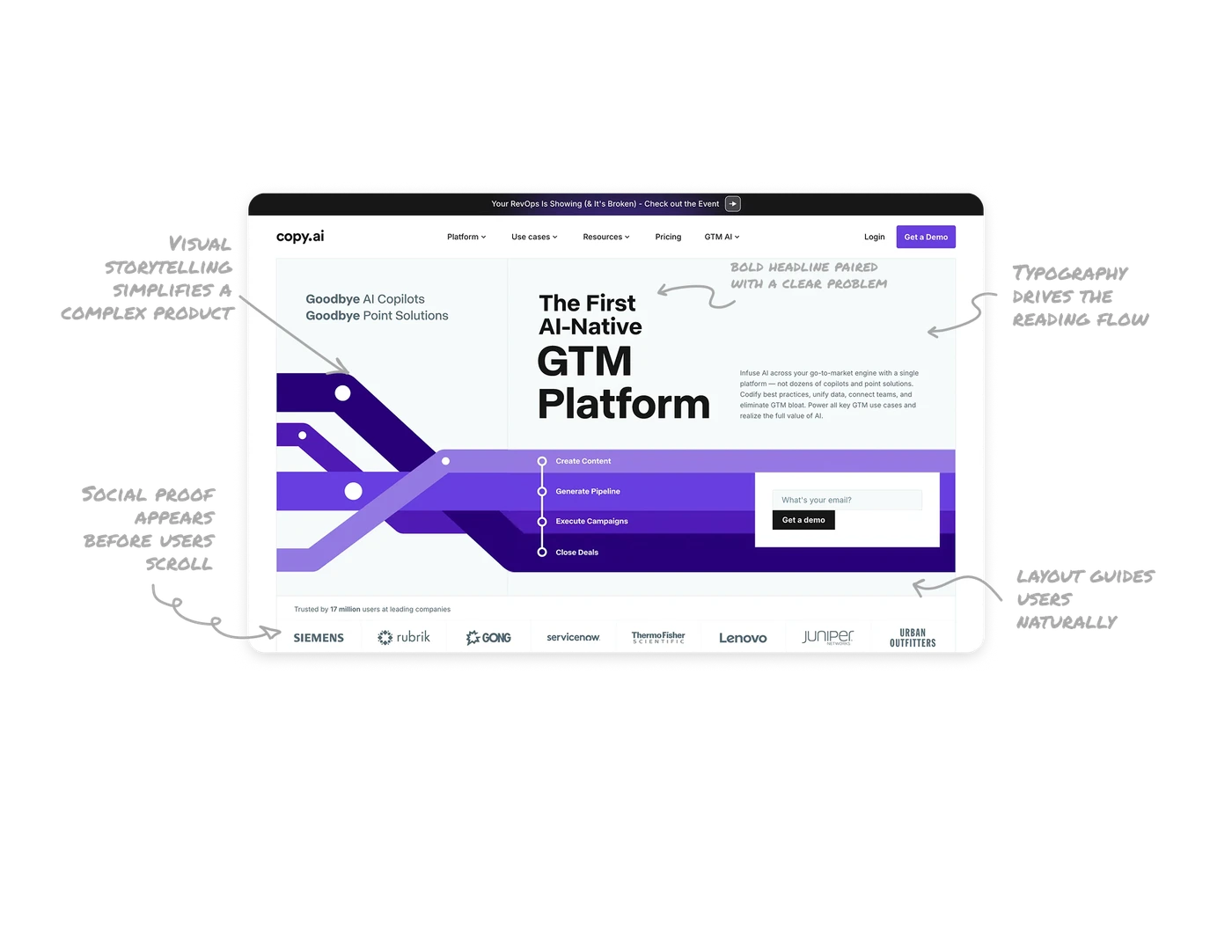
A bold headline paired with a clear industry problem
The headline is short, bold, and immediately communicates the product category. Right next to it, the supporting line addresses a common industry frustration by saying goodbye to AI copilots and point solutions. This combination does two things quickly. It tells users what the product is and why the current alternatives are not ideal. That clarity helps visitors decide within seconds whether the page is relevant to them.

Visual storytelling simplifies a complex product
The large pipeline graphic translates a complicated GTM workflow into a simple visual flow. Instead of explaining the system through long paragraphs, the visual demonstrates how everything connects. This helps users grasp the platform's value faster.
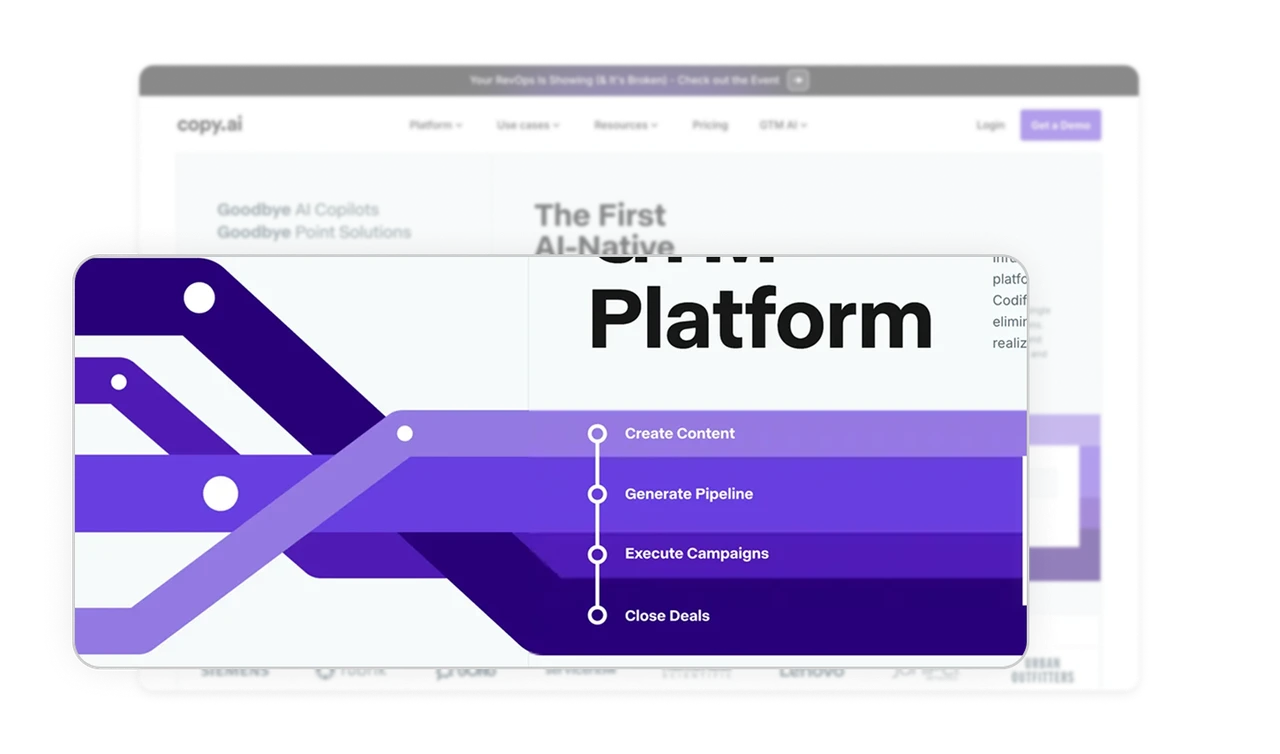
Layout guides users naturally from problem to action
The hero section follows a clear left-to-right structure. First, it introduces the problem, then the platform solution, and finally, the email field to request a demo. This sequence mirrors the way people process information. Understand the problem, evaluate the solution, then take action. When the flow matches user thinking, conversion becomes more natural.
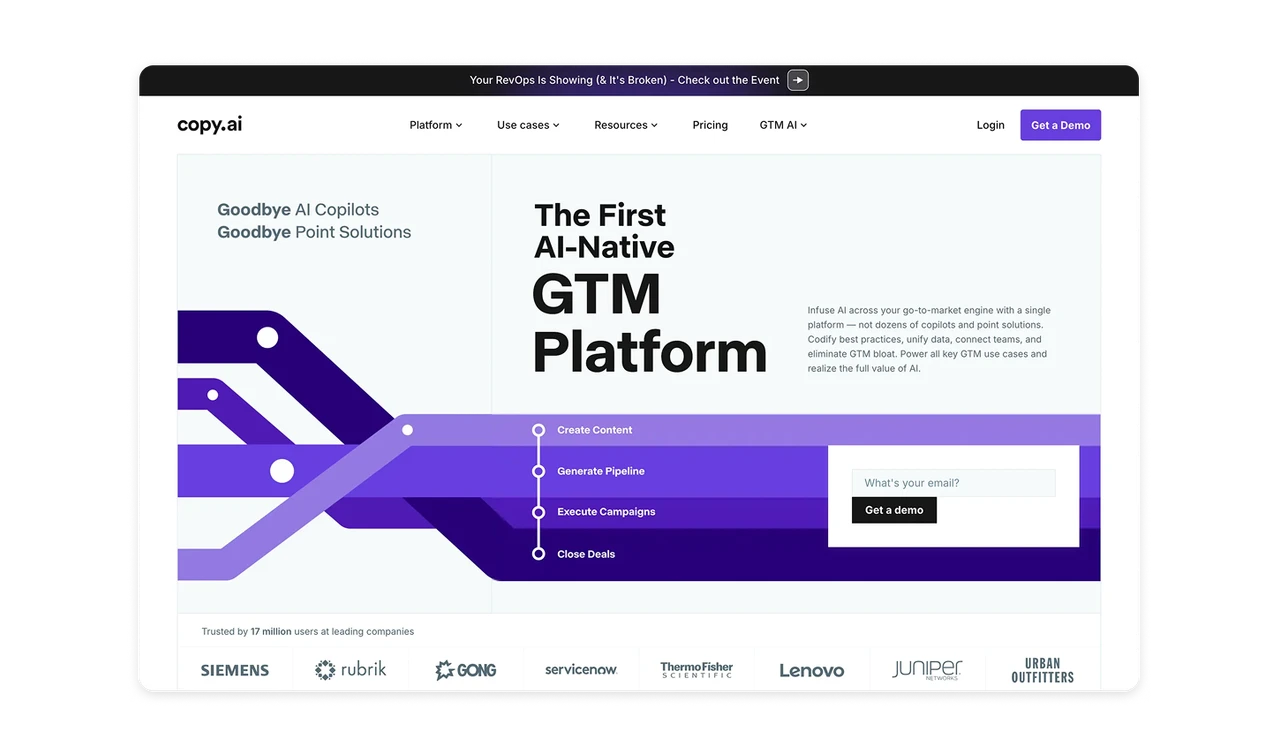
Social proof appears before users even scroll
Below the hero section, the page highlights that the product is trusted by 17 million users along with recognizable company logos. Showing adoption early reduces skepticism. It signals that other well known companies already rely on the product, which increases credibility before users explore deeper into the page.

Typography drives the reading flow
The typography hierarchy is intentionally structured so users scan the page in a predictable order. The large headline grabs attention first. Then the supporting problem statement provides context. Finally, the smaller paragraph offers a deeper explanation. This layered approach allows both quick scanners and detail oriented readers to absorb the information comfortably without feeling overwhelmed.

Similar Breakdown Lessons