Pet Tracking Dashboard

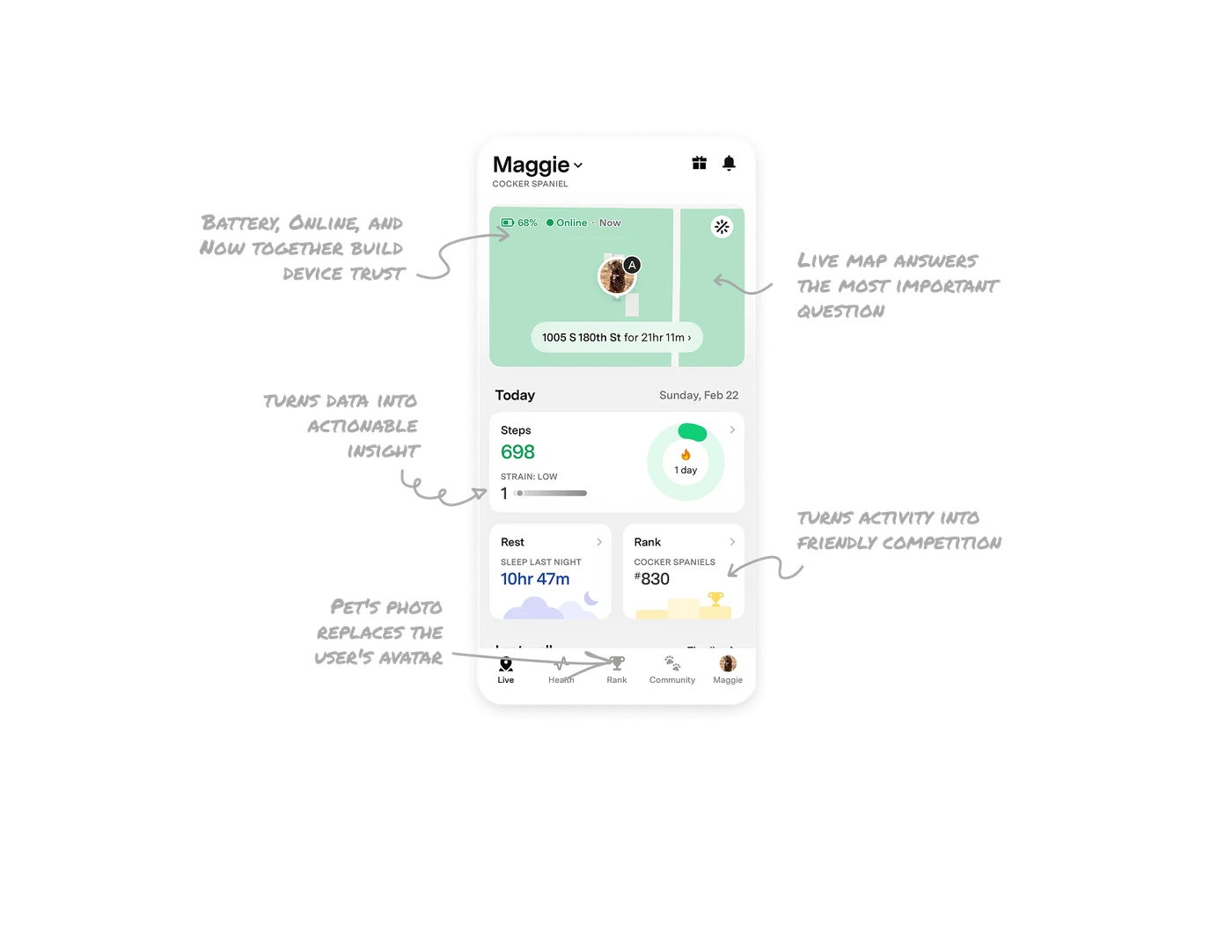
Live map answers the one question users actually open the app for
"Where is my dog right now" is the only reason most owners launch a pet tracker. Fi puts the live map and pet's photo at the top before any health stat or community feature. Designing the dashboard around the user's primary anxiety, not the product's full feature list, is the difference between an app users open daily and one they forget exists.
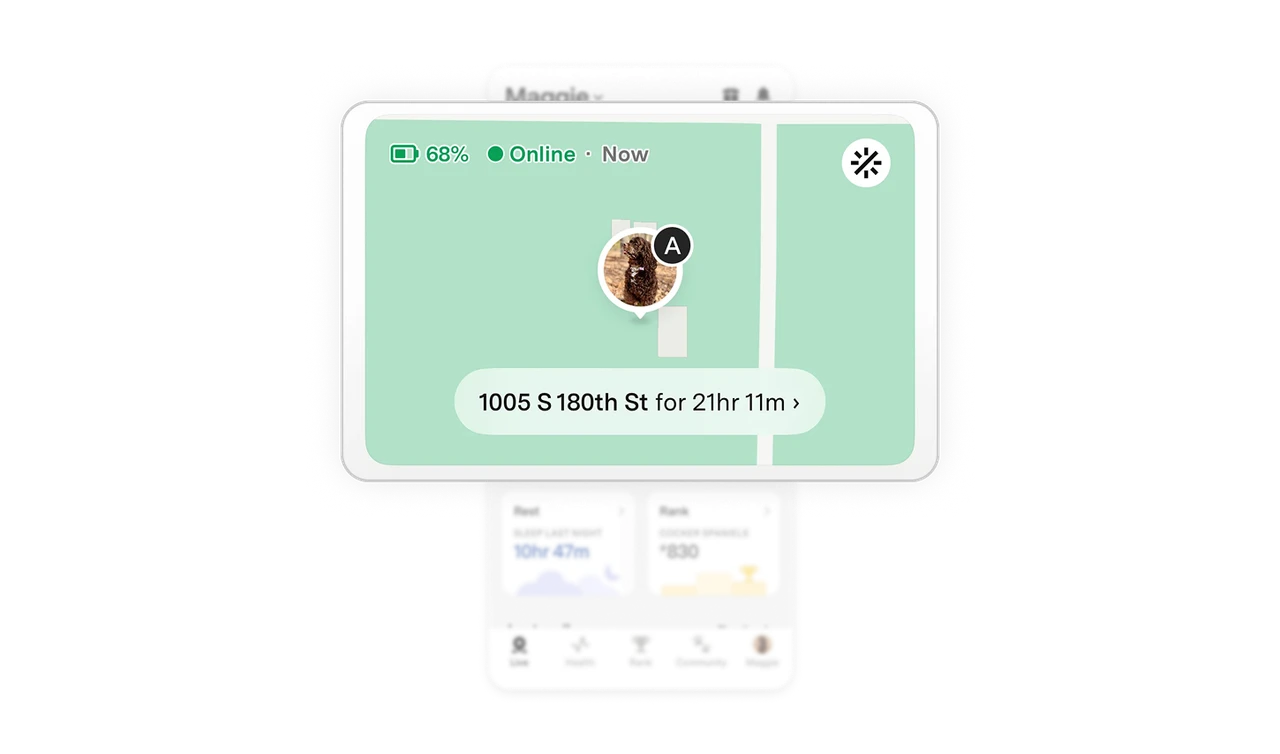
Battery, Online, and Now together build device trust
68%, the green Online dot, and "Now" sit as a tight row above the map. Each answers a different question about whether the data shown can be trusted right now. Pet trackers fail when owners doubt the data. Surfacing battery, connection, and freshness together creates a trust signal cluster that no single indicator could carry alone.
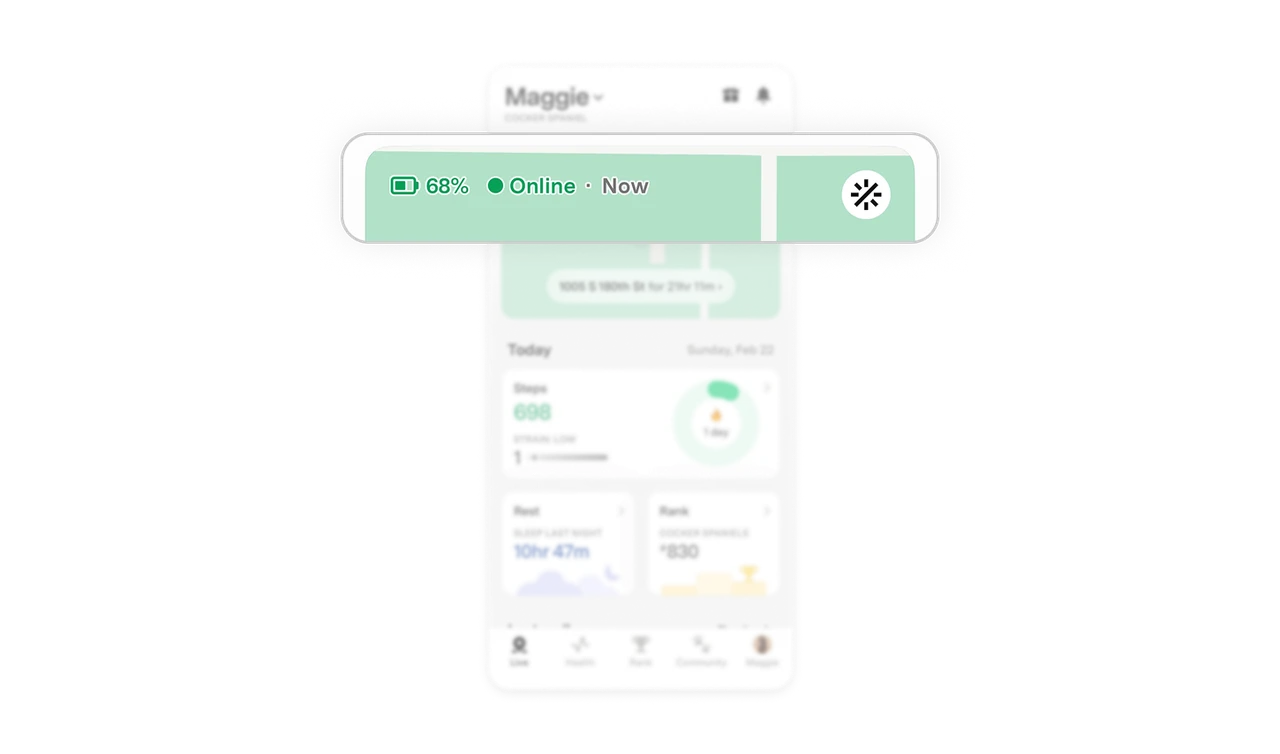
Strain paired with steps turns data into actionable insight
Showing 698 steps next to "Strain: Low" tells owners both what happened and what it means. Most fitness apps for dogs show raw activity numbers and leave interpretation to the user. Pairing a metric with its meaning ("low strain, your dog could use more exercise") turns passive data into a conversation about pet care, which is the actual value owners want.
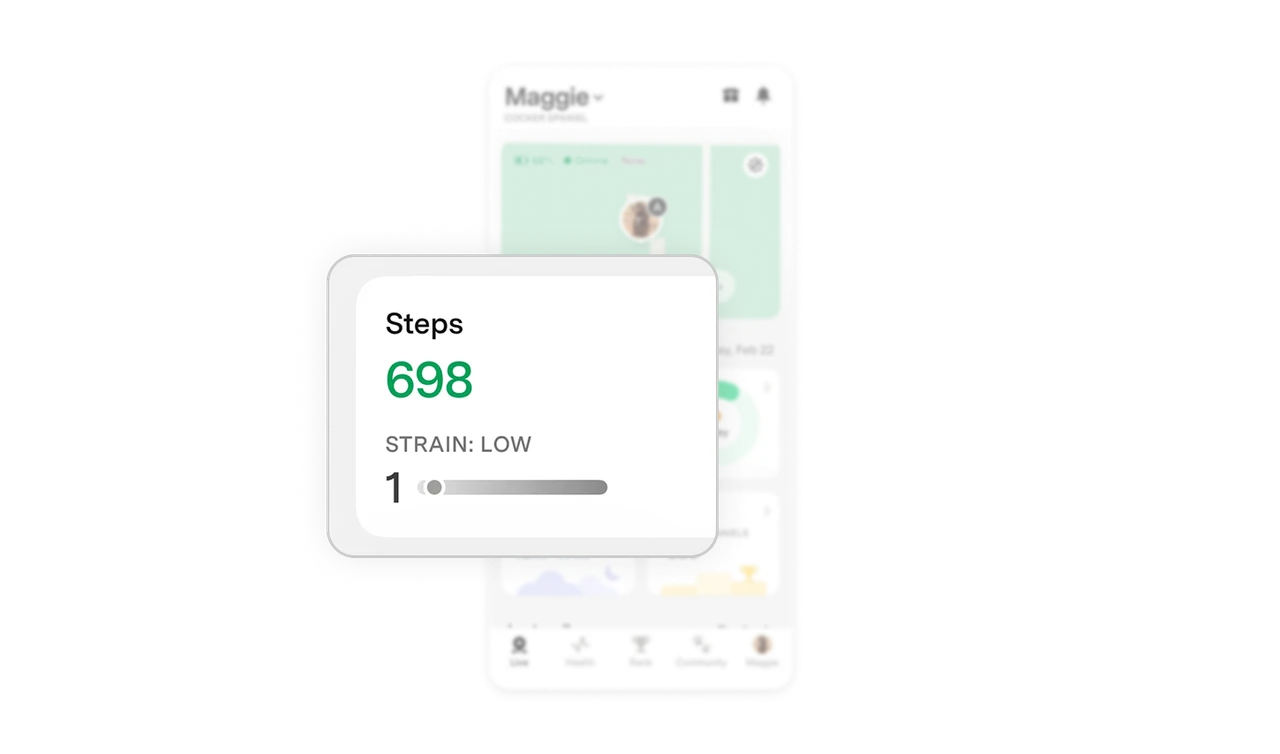
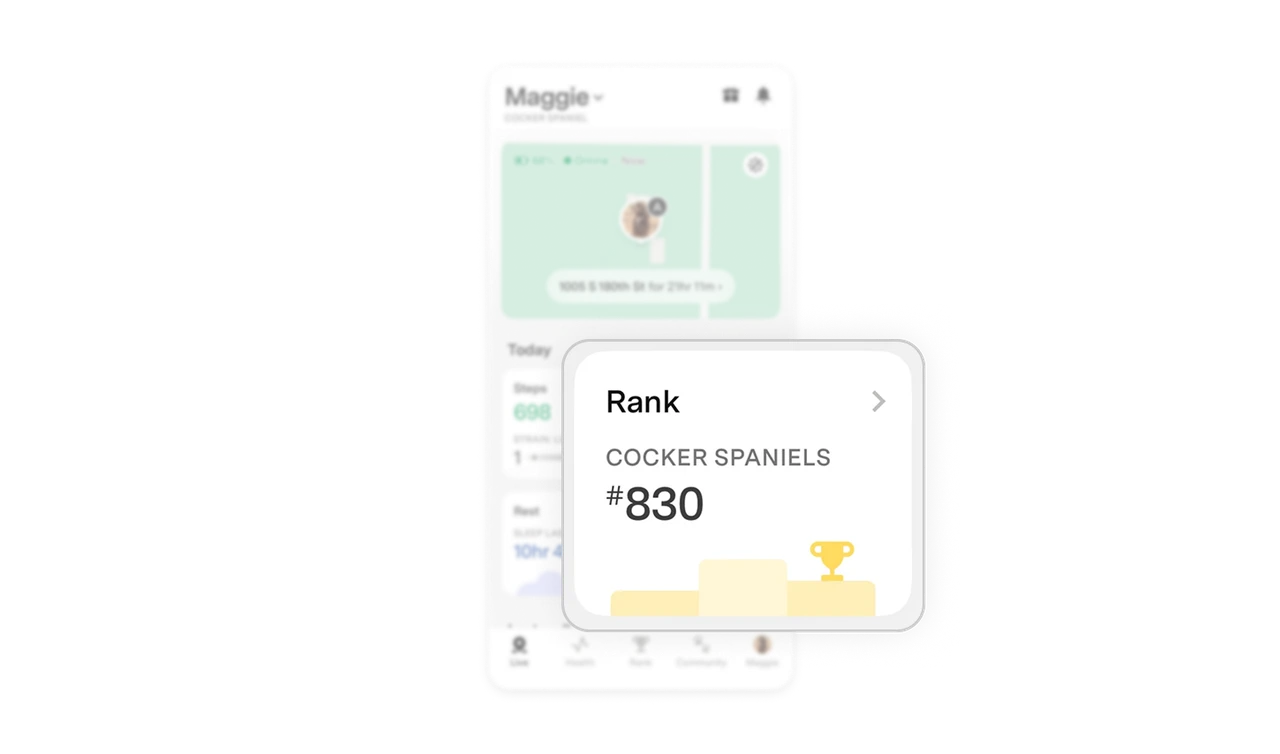
Breed-specific Rank turns activity into friendly competition
Rank #830 among Cocker Spaniels gives owners a comparison that feels personal because it is breed-specific. Comparing a Cocker Spaniel to all dogs would feel meaningless. Filtering ranking by breed creates a fair, motivating competition that drives daily app opens and walks. This is gamification done with relevant peer groups, not generic global leaderboards.
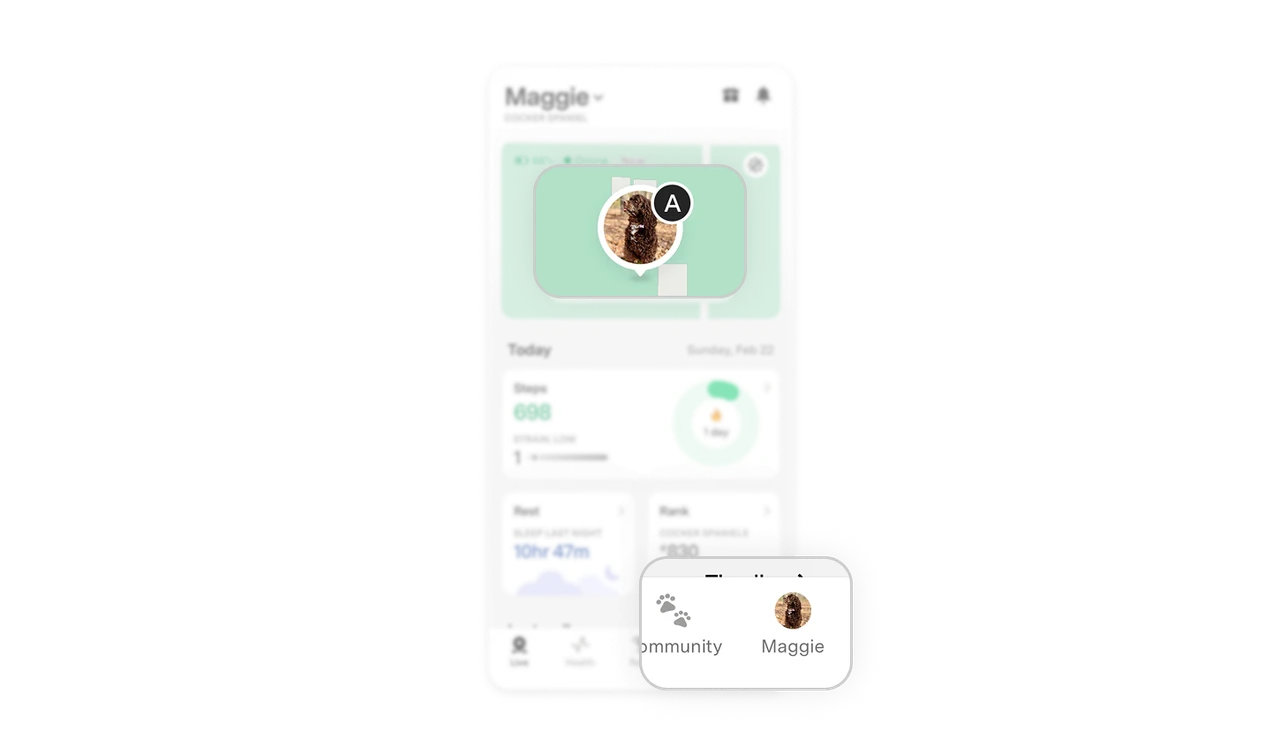
Pet's photo replaces the user's avatar in the bottom nav
The bottom-right tab uses Maggie's actual photo instead of a generic profile icon, and the header reads "Maggie, Cocker Spaniel" not the owner's name. The entire app is framed around the pet, not the human. This emotional re-centering, treating the pet as the user, is what separates products owners love from products owners merely use.
Similar Breakdown Lessons