Recipe Discovery

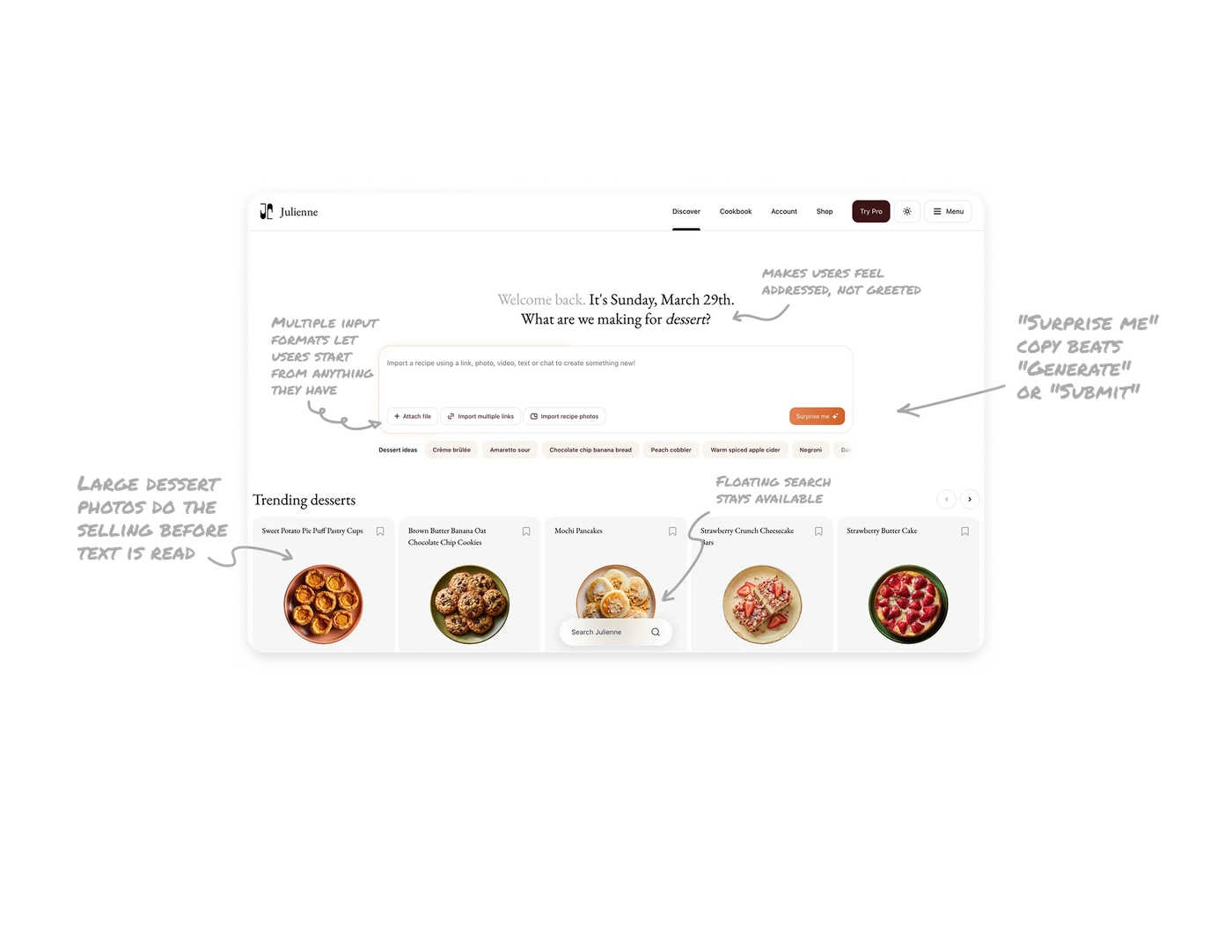
Conversational headline makes users feel addressed, not greeted
"What are we making for dessert?" reads like a friend asking a question, not a dashboard label. The mix of date context, italic emphasis on "dessert," and the inclusive "we" creates an intimate tone. Headlines that speak to users instead of at them set the entire emotional contract for the rest of the screen.
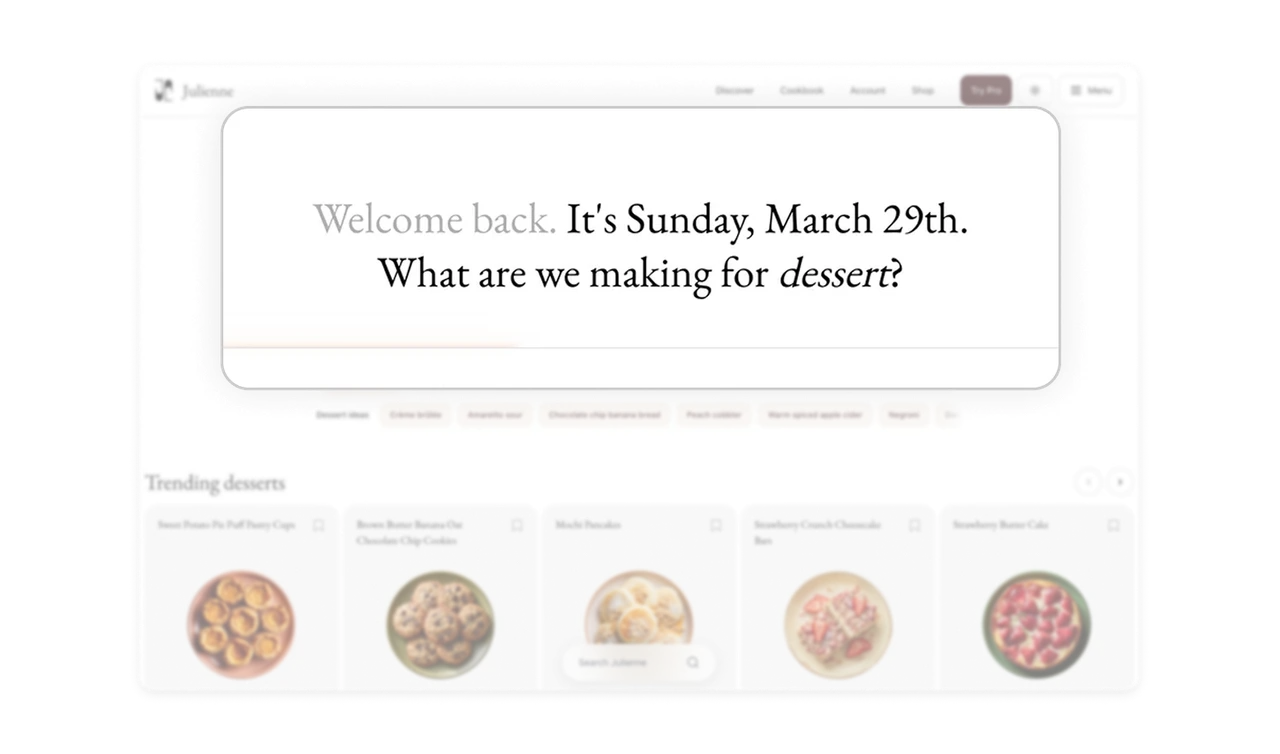
Multiple input formats let users start from anything they have
Attach file, Import multiple links, Import recipe photos sit as three input options on the AI chat bar. Users can start a recipe from a URL, an image, a chat, or a file. Recipes live everywhere online, and forcing one input type creates friction. Accepting whatever format users already have at hand removes the highest-friction step of any AI tool: figuring out how to start.
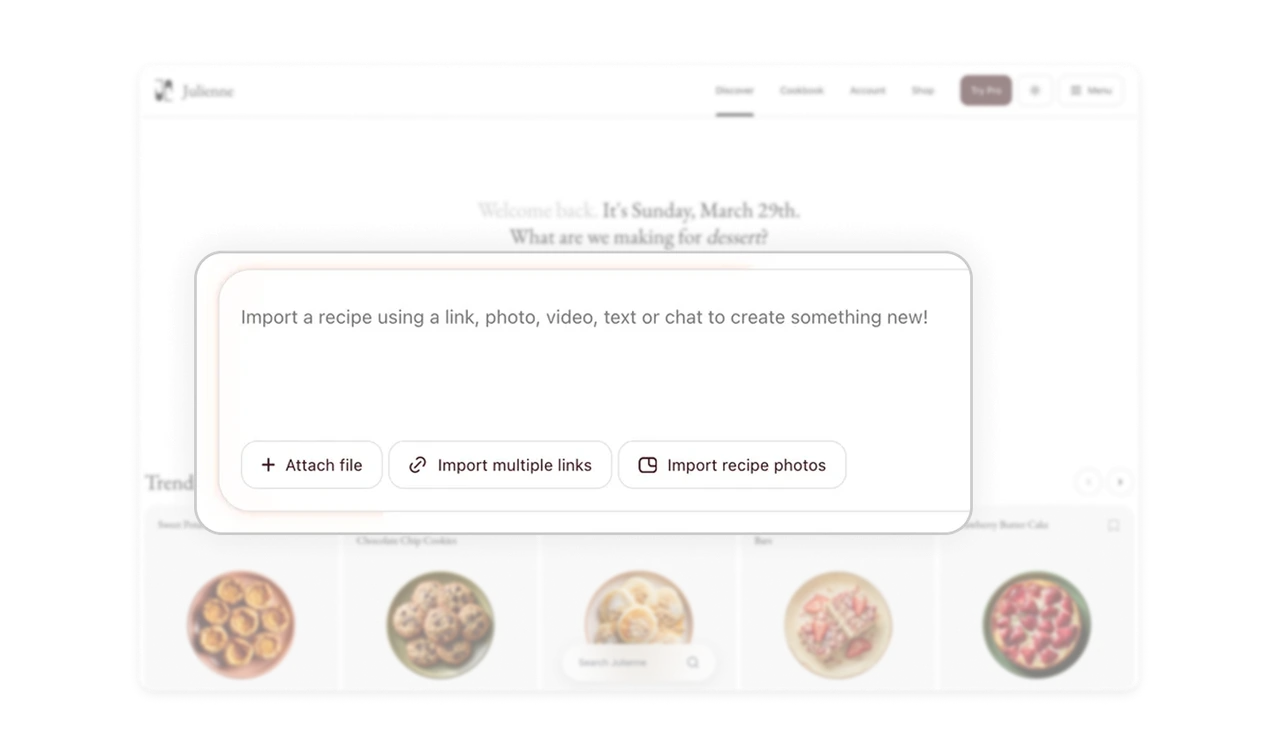
"Surprise me" copy beats "Generate" or "Submit"
The primary CTA reads "Surprise me" with a sparkle icon instead of a generic "Generate" or "Go." This single word change turns a transactional moment into a playful one. Users who feel they are being surprised, not commanded, engage with AI tools more freely. Button copy is one of the cheapest interventions with the highest emotional impact in any product.
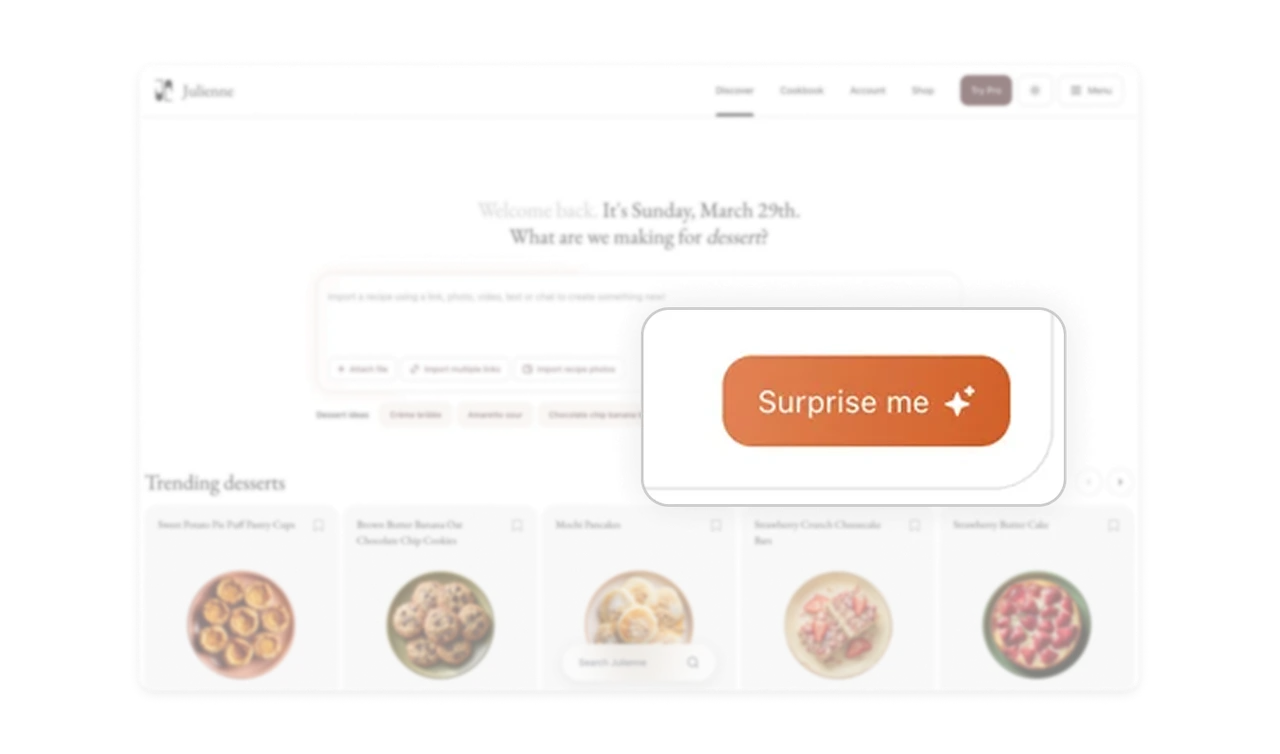
Large dessert photos do the selling before text is read
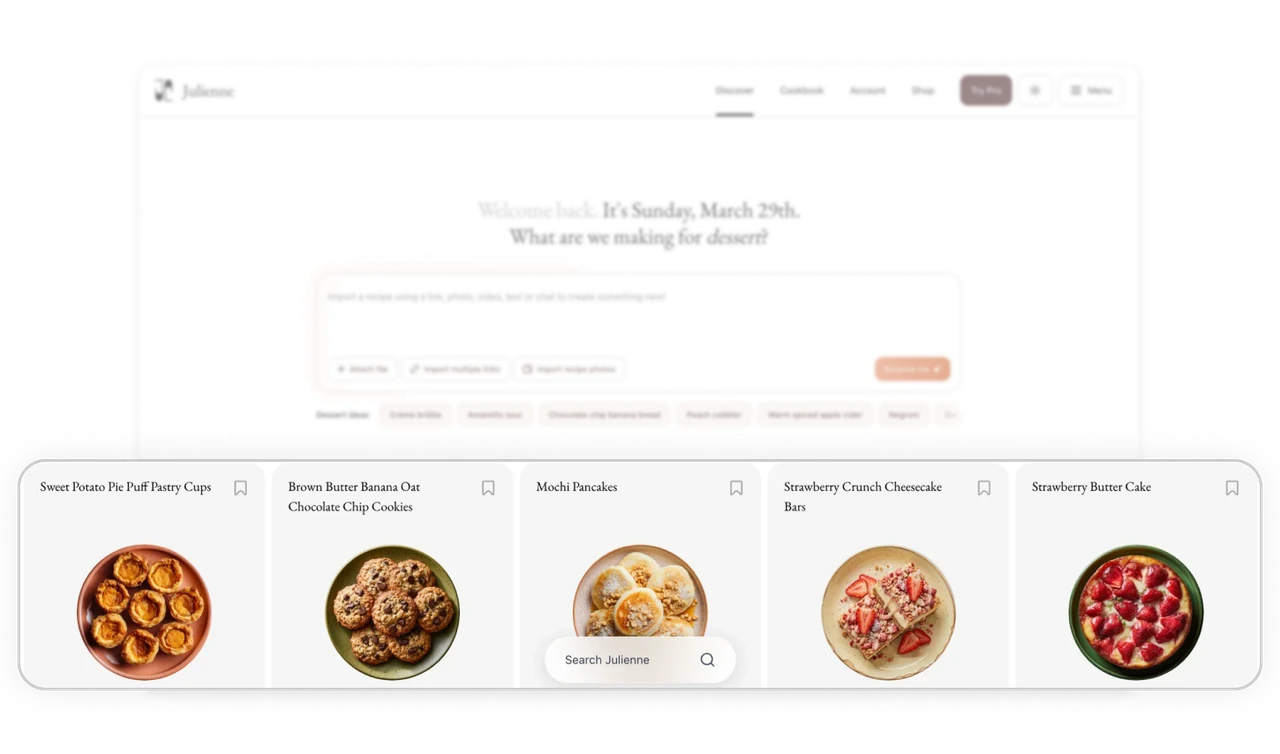
Trending dessert cards prioritize the food image with the title sitting small above it. The photo is the primary information, the name is secondary. Food photography triggers an immediate emotional and biological response (craving) that no recipe name could match. In any product where visual desirability drives conversion (food, travel, fashion), the image should be the loudest element, not the label.
Floating search pill stays available without taking space
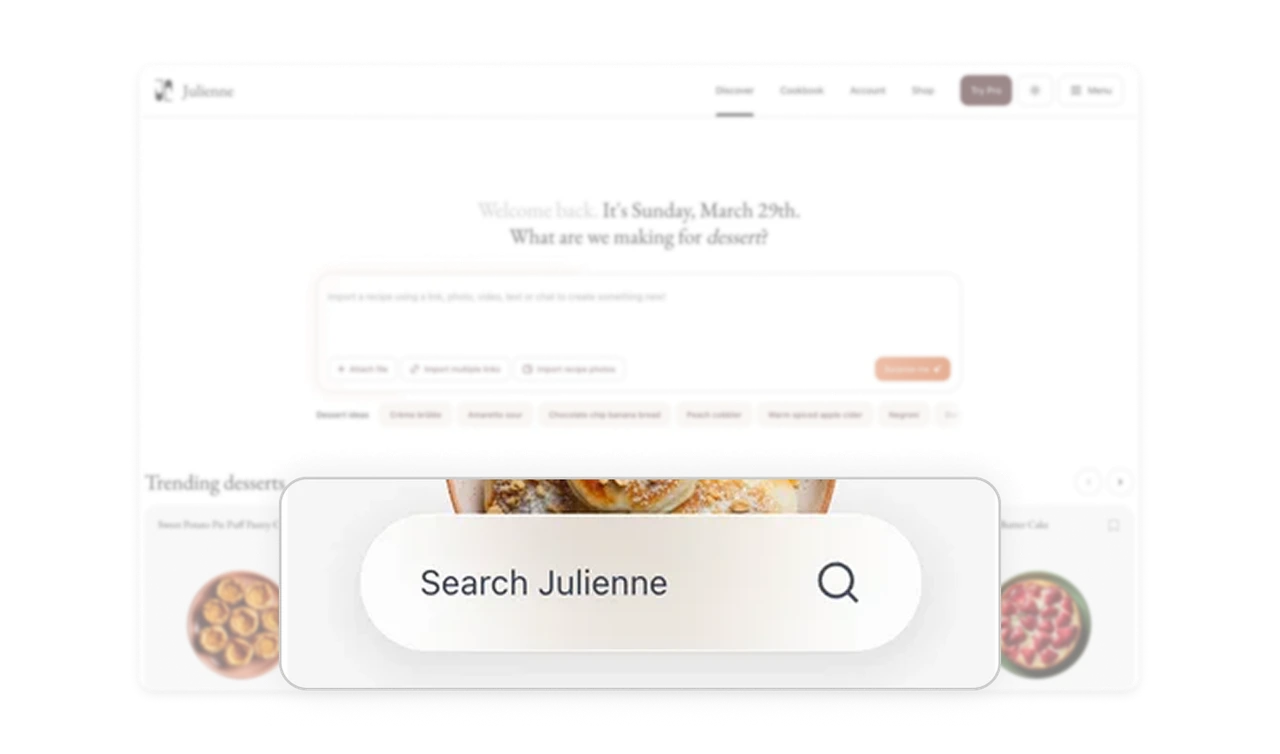
"Search Julienne" floats over the trending cards as a pill, always accessible without occupying a fixed header position. Users can search at any point during browsing without scrolling back up. Floating search beats fixed search bars because it adapts to the user's gaze rather than locking into one viewport position. This is contextual access without visual cost.
Similar Breakdown Lessons