Car Rental Dashboard

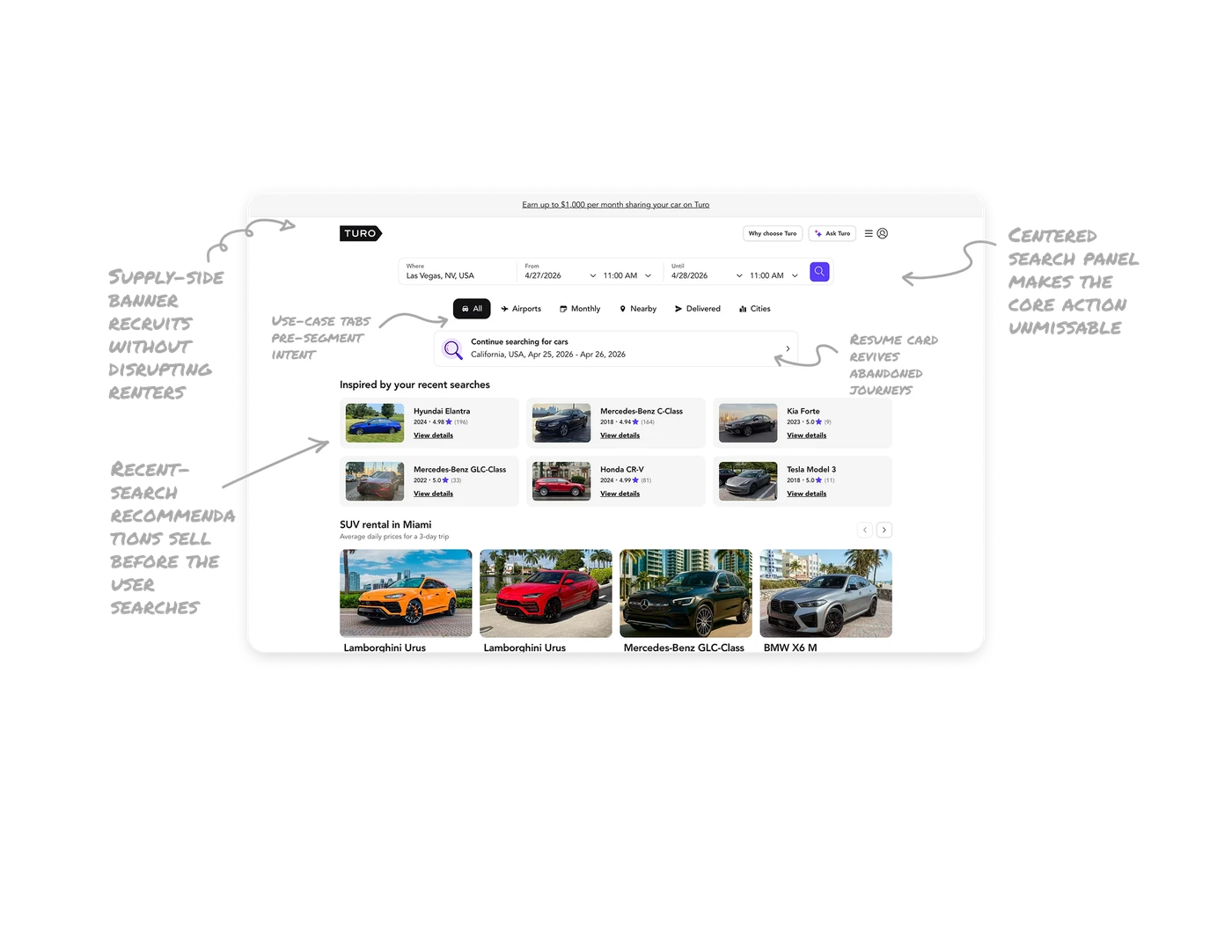
Centered search panel makes the core action unmissable
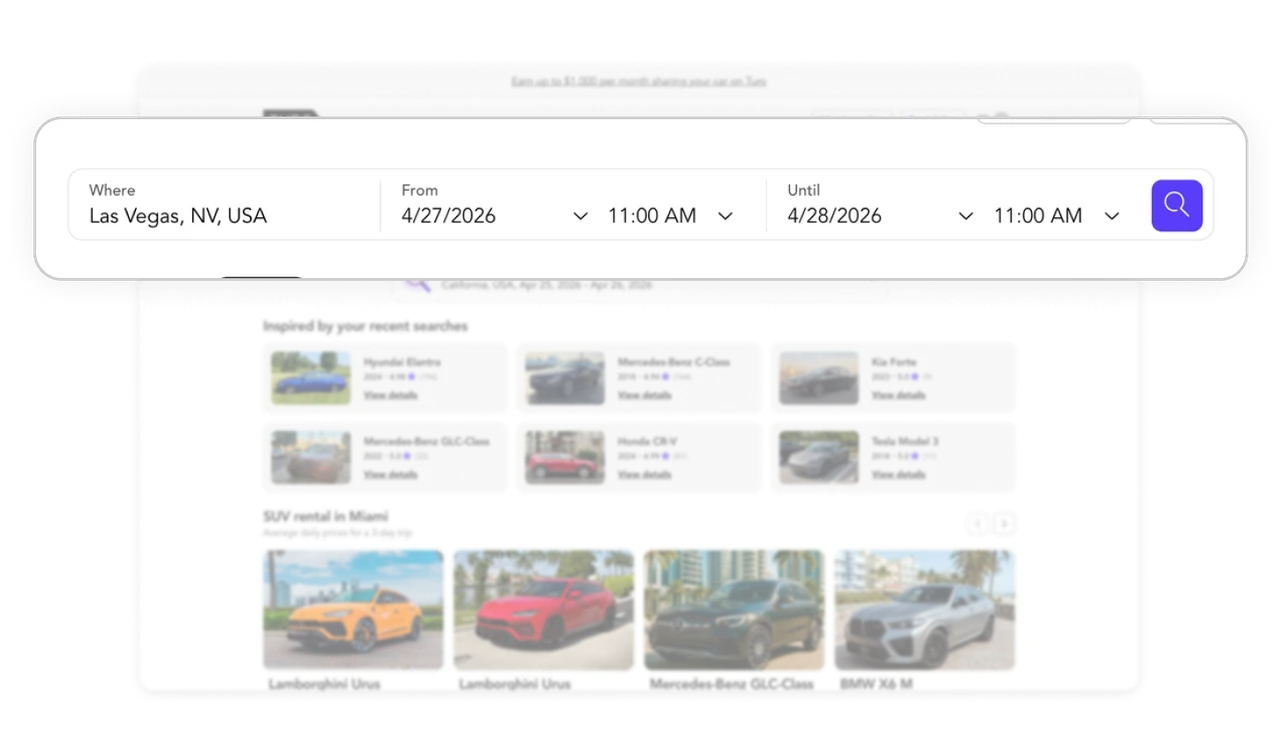
The Where, From, and Until search bar sits centered and prominent at the top, with everything else flowing below it. The single most important action, searching for a car, gets the most visual weight and the clearest position. When a product has one dominant use case, the home screen should make that action impossible to miss. Hierarchy should mirror what users came to do, not show off everything the product offers.
Use-case tabs pre-segment intent right under search
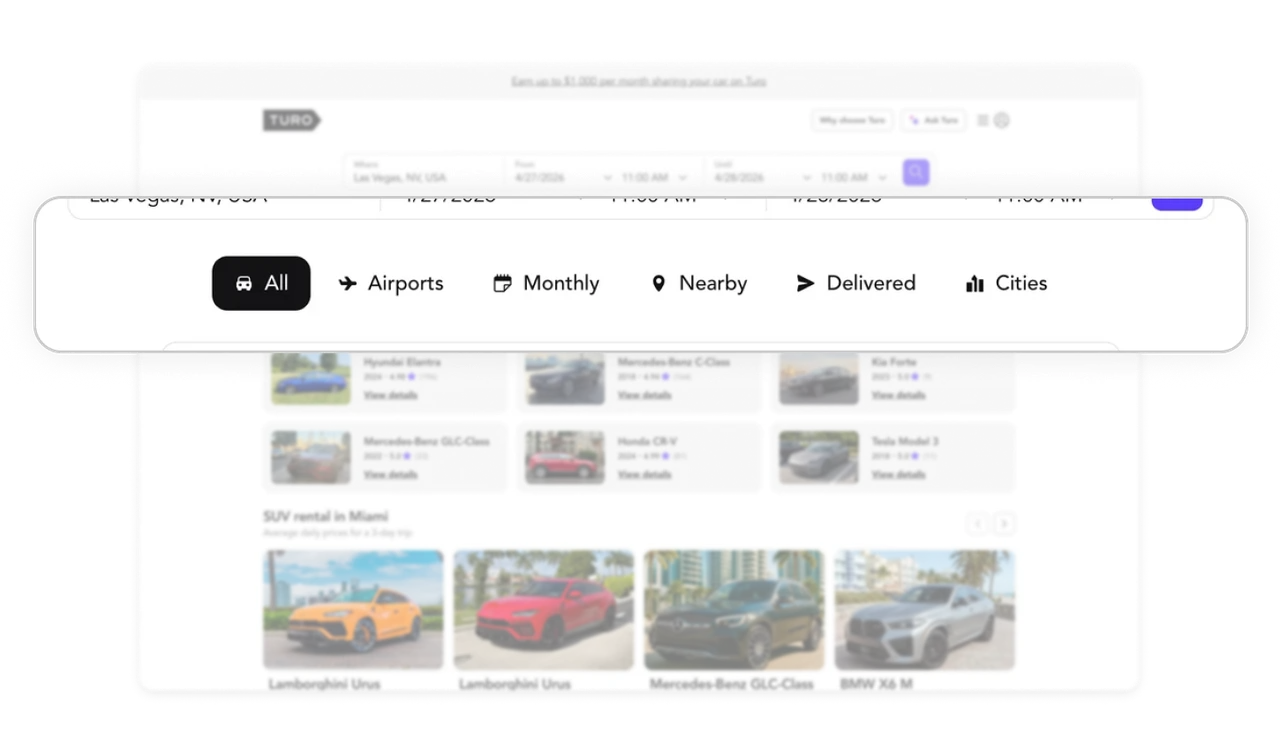
All, Airports, Monthly, Nearby, Delivered, Cities sit as tabs below the search bar, with All selected by default. Each maps to a distinct rental context. Surfacing the common rental scenarios as one-tap filters lets users narrow by intent before they even type. Default selection on All means the casual user is never blocked, while the specific user finds their scenario instantly. Pre-segmenting intent reduces the work of refining results later.
Resume-search card revives abandoned journeys
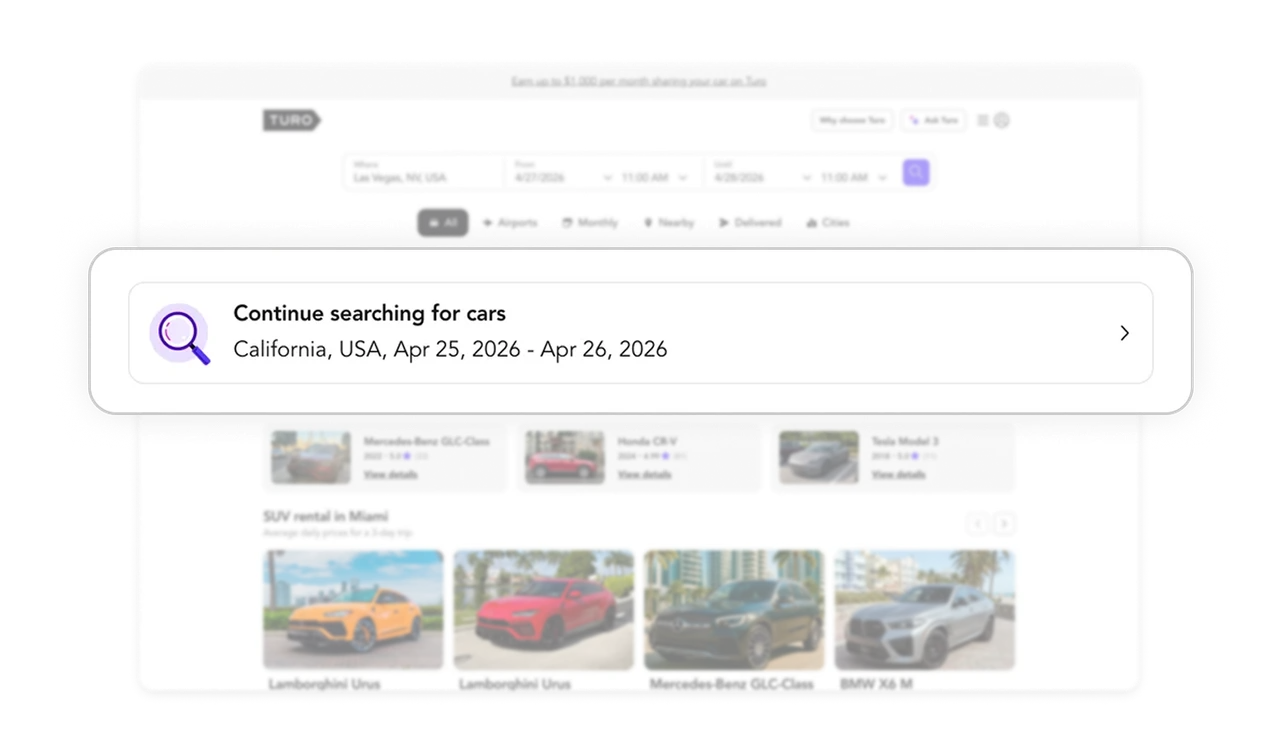
"Continue searching..." sits as a card with the prior search preloaded. Users pick up exactly where they left off without re-entering dates or location. Most users abandon a search and return later, so reviving the previous journey removes the friction of restarting. Recovering an abandoned search is one of the highest-leverage conversion mechanics because the intent already existed, it just needs a path back.
Recent-search recommendations sell before the user searches
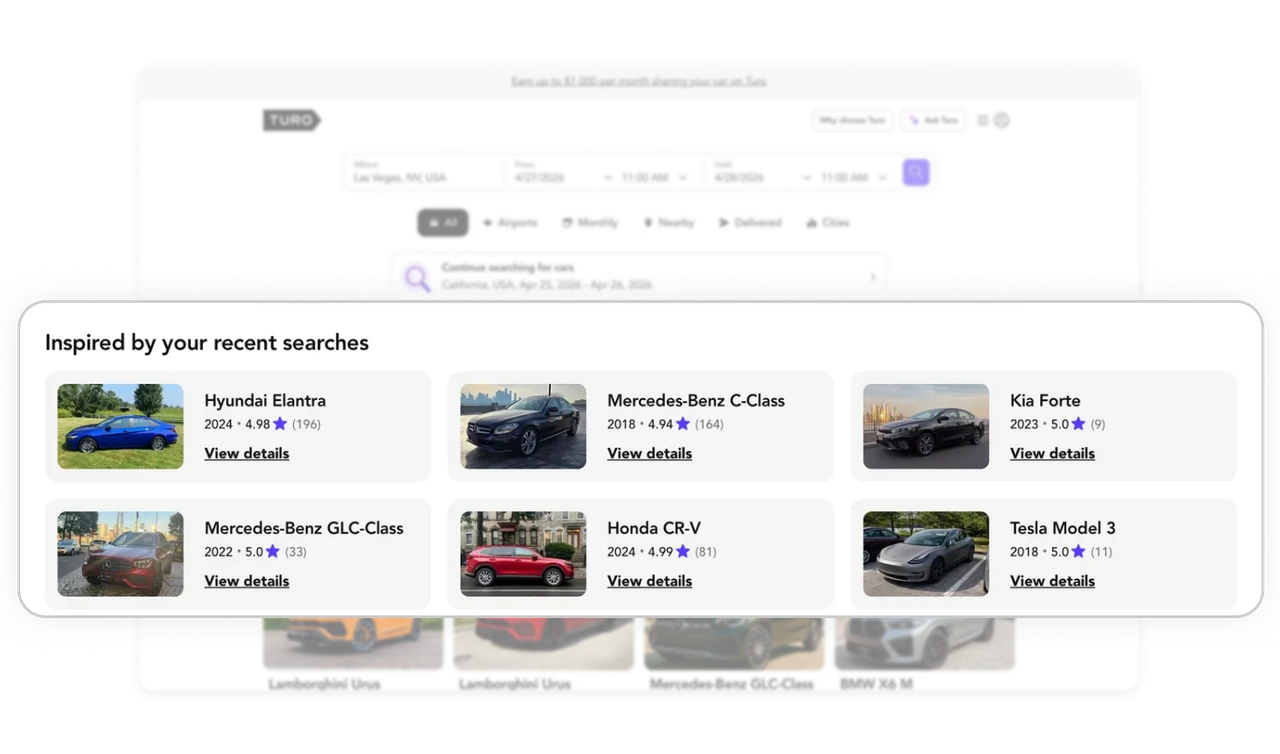
"Inspired by your recent searches" shows specific cars with photos, ratings, and review counts before any new search runs. This turns a blank home screen into a personalized storefront. Showing real, ratable options upfront gives users an entry point they did not have to work for. Personalized recommendations with social proof attached convert browsing into booking by removing the empty-state friction of "where do I start."
Supply-side banner recruits without disrupting renters
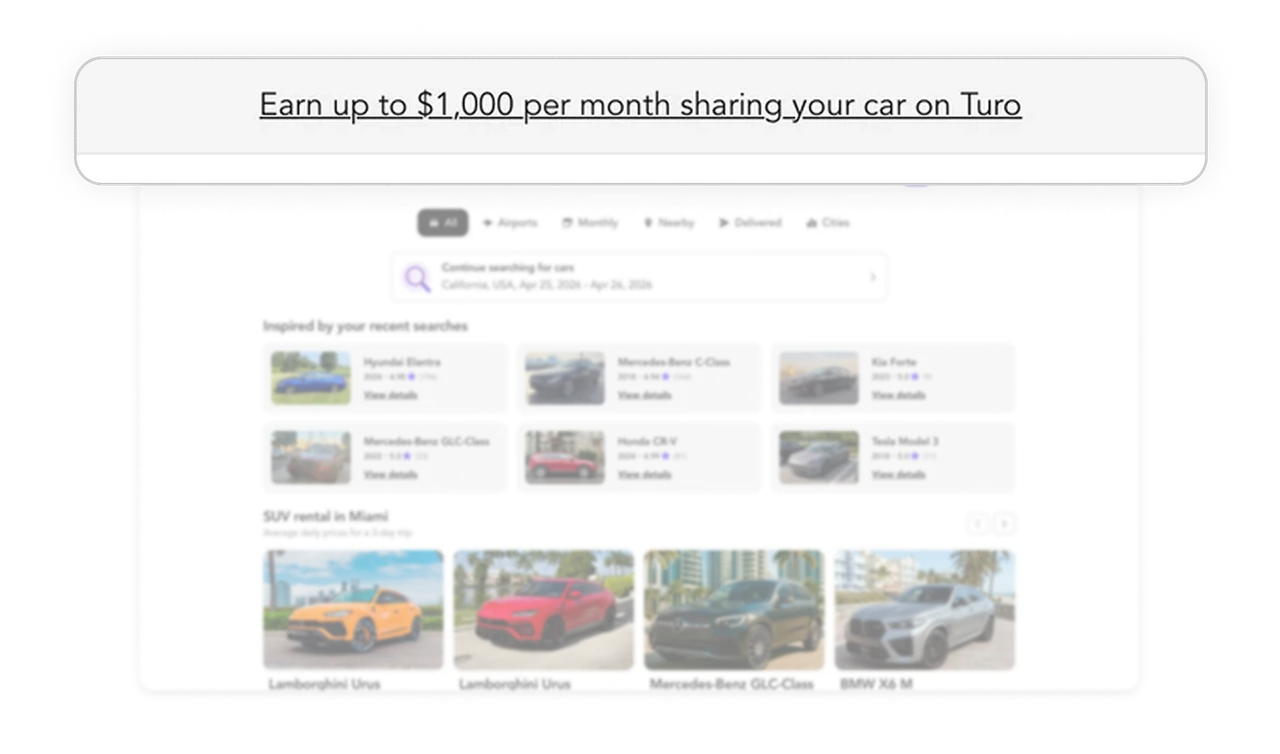
"Earn up to $1,000..." sits as a thin top banner, present but not pushy. It recruits the supply side (car owners) without getting in the way of the demand side (renters). A marketplace needs both, and a quiet, well-placed banner grows supply while the renter experience stays clean. Serving two audiences on one screen without compromising either is the mark of mature marketplace design.
Similar Breakdown Lessons