AI Workspace

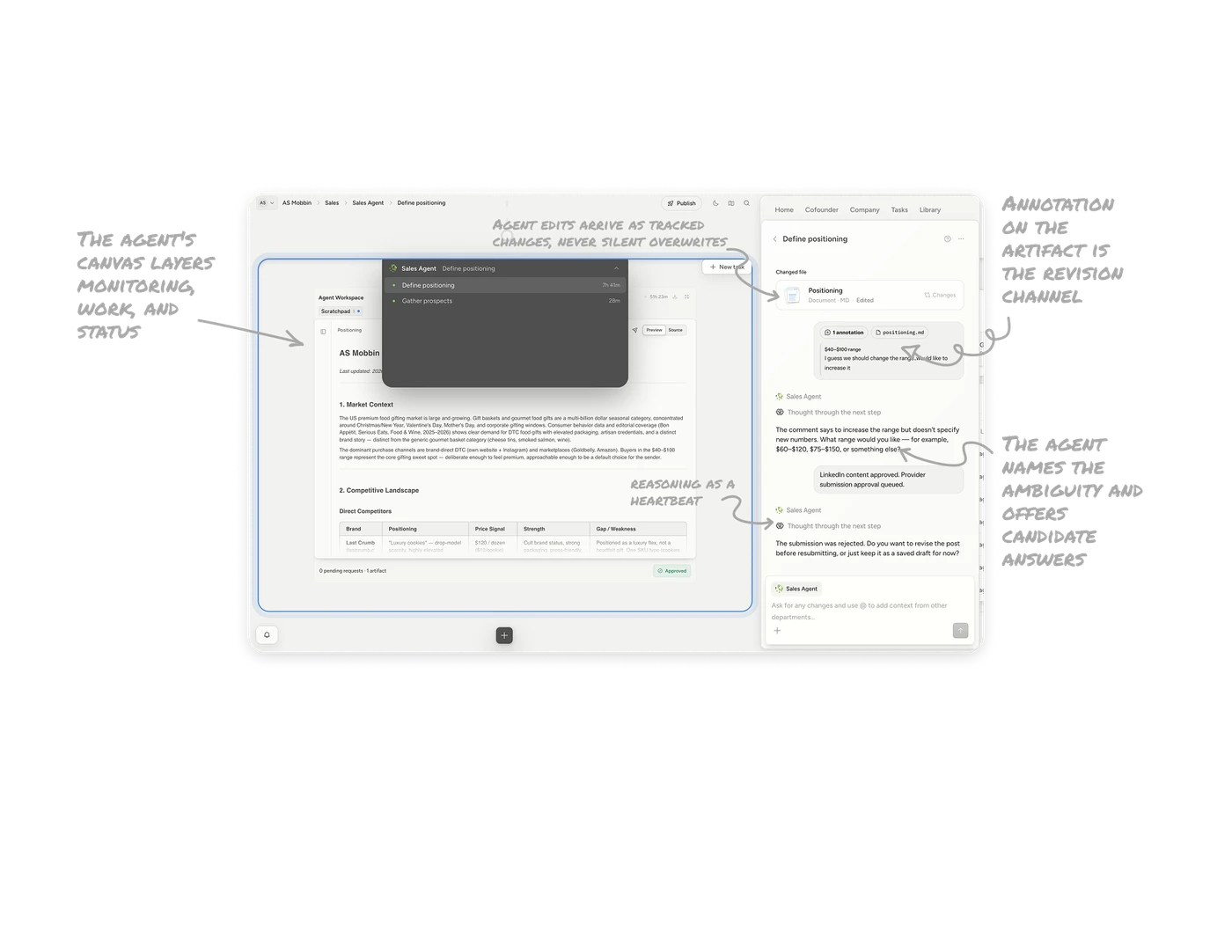
Annotation on the artifact is the revision channel
The user highlighted "$40-$100 range" in the document and commented directly on it, and the annotation card pins to the exact text in positioning.md. Feedback attaches to the artifact, not a detached chat. A highlight-and-comment carries location, target, and intent in one gesture, no "in section 1, where you mention pricing" prose required. Google-Docs commenting grammar repurposed as the human-to-agent API is the highest-bandwidth revision channel AI work has.
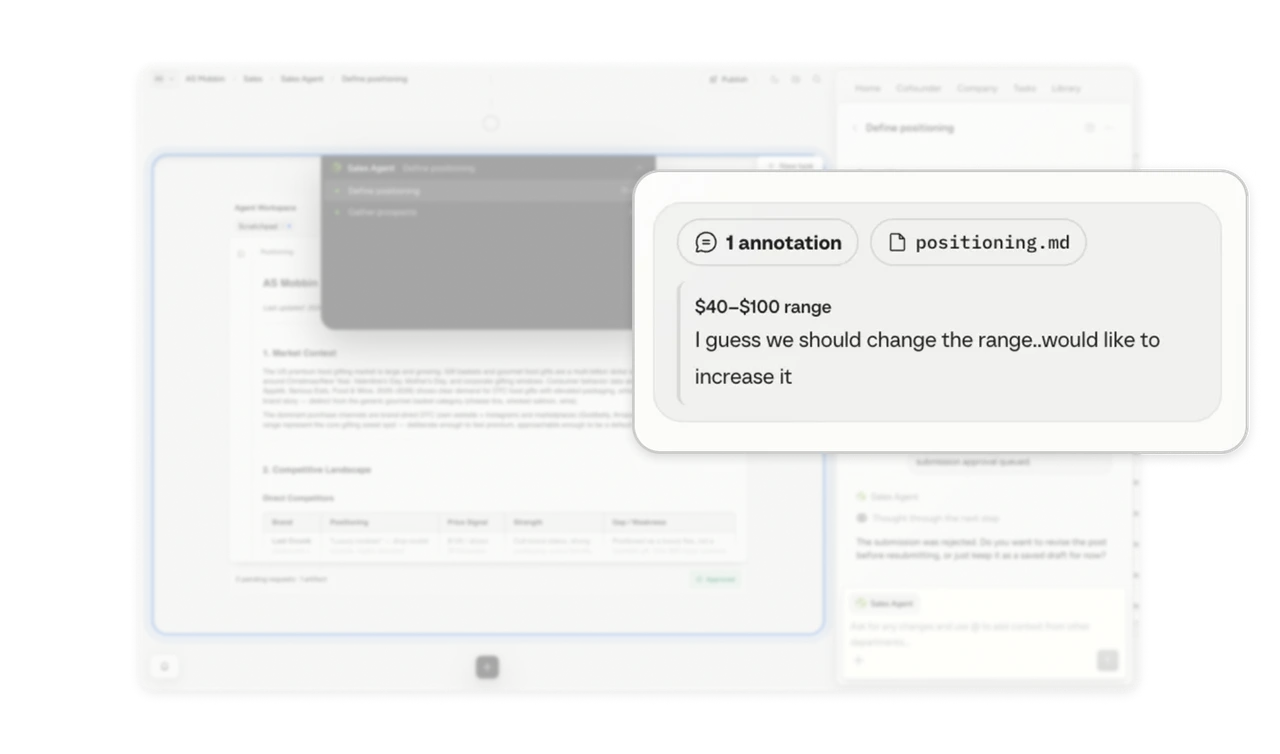
The agent names the ambiguity and offers candidate answers
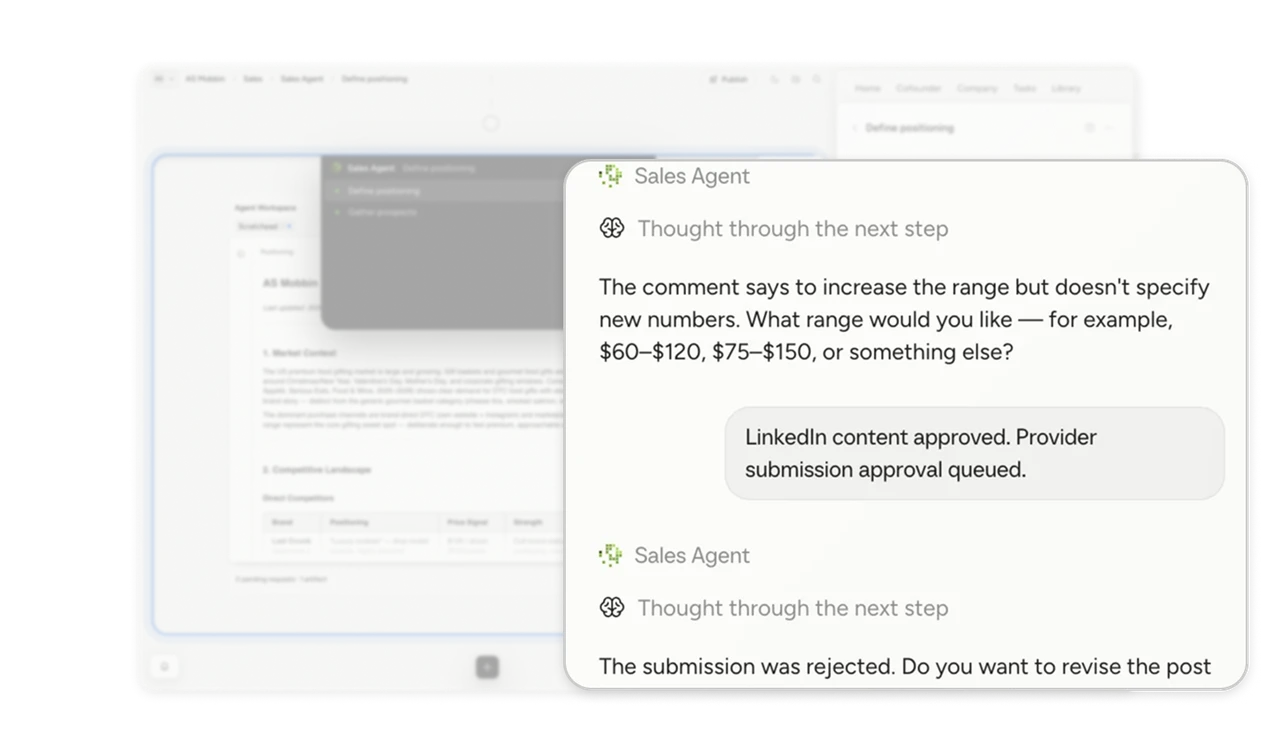
The comment said increase the range but gave no numbers, so the agent responds: "What range would you like, for example, $60-$120, $75-$150, or something else?" It surfaces the gap AND proposes options, turning an open question into a multiple-choice tap. When instructions are underspecified, clarify with candidates instead of silently picking. The human's job stays judgment, not specification-writing, and this is uncertainty handled as collaboration, not friction.
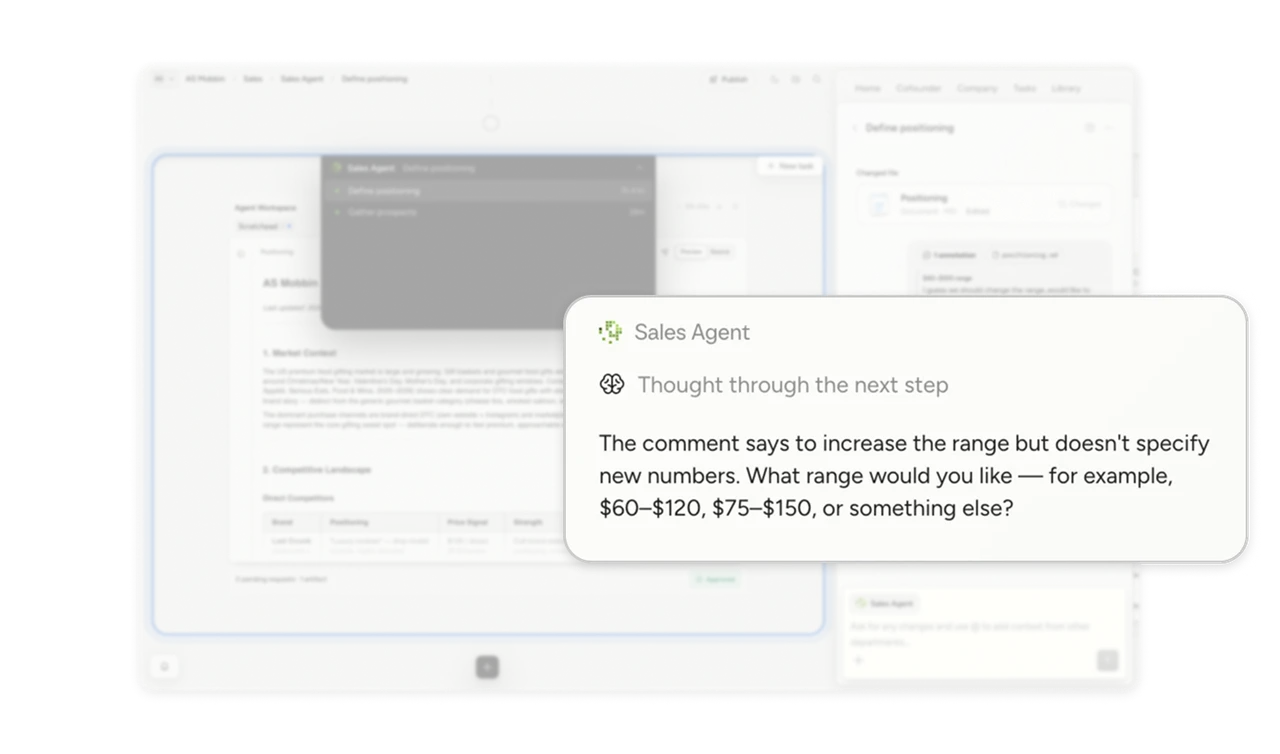
The agent's canvas layers monitoring, work, and status
The left workspace stacks three altitudes: the Sales Agent task overlay floats sticky at the top, expandable for running tasks, collapsible when you just want to watch. The document canvas holds the output with Preview and Source toggles, and the footer carries state: "0 pending requests, 1 artifact, Approved." Monitoring up top, work in the middle, status at the base. In agent workspaces, visual hierarchy is not styling, it is the org chart of the user's attention.
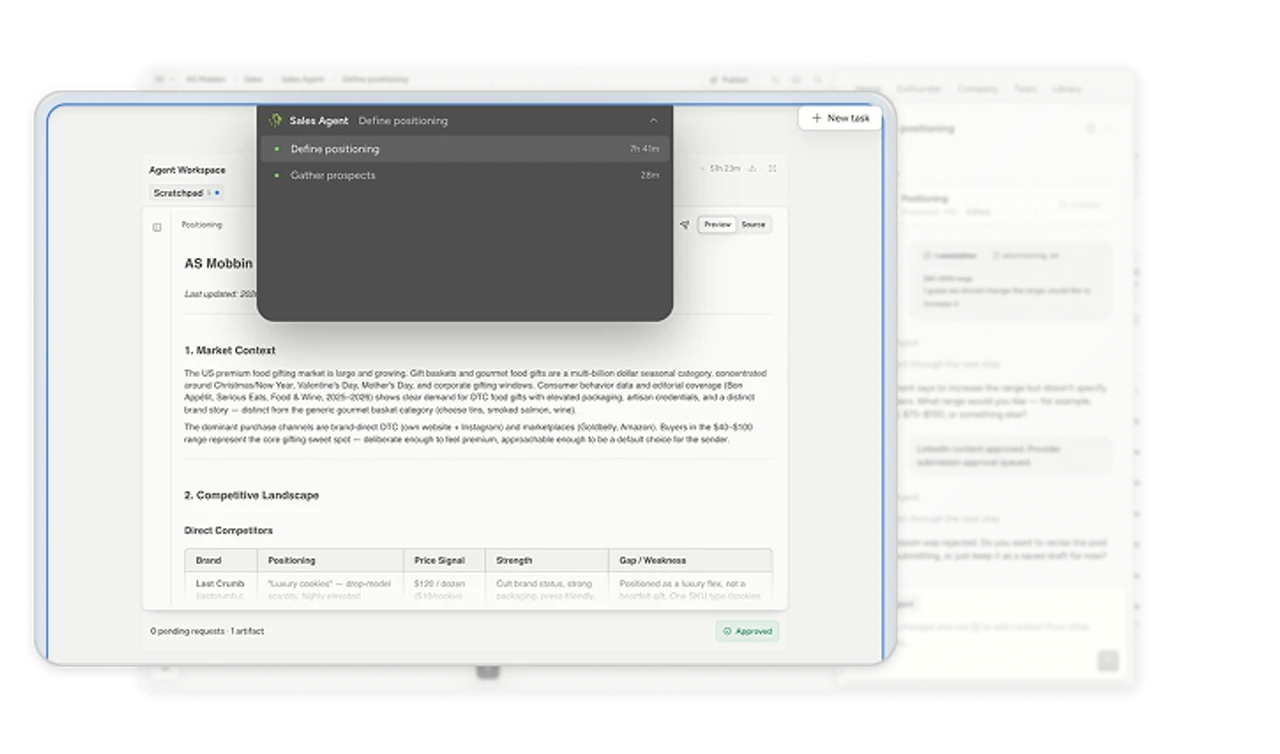
"Thought through the next step" is reasoning as a heartbeat
Between messages, a labeled event marks that deliberation happened, without dumping the chain of thought. Represent AI reasoning as named milestones, not raw traces or silence. The user learns the agent is thinking and when, keeping long-running work legible without the noise of full logs. It is the middle path between a collapsed "show thinking" link and streaming every token: reasoning as a heartbeat, not a transcript, which is exactly the fidelity a manager needs.
Agent edits arrive as tracked changes, never silent overwrites
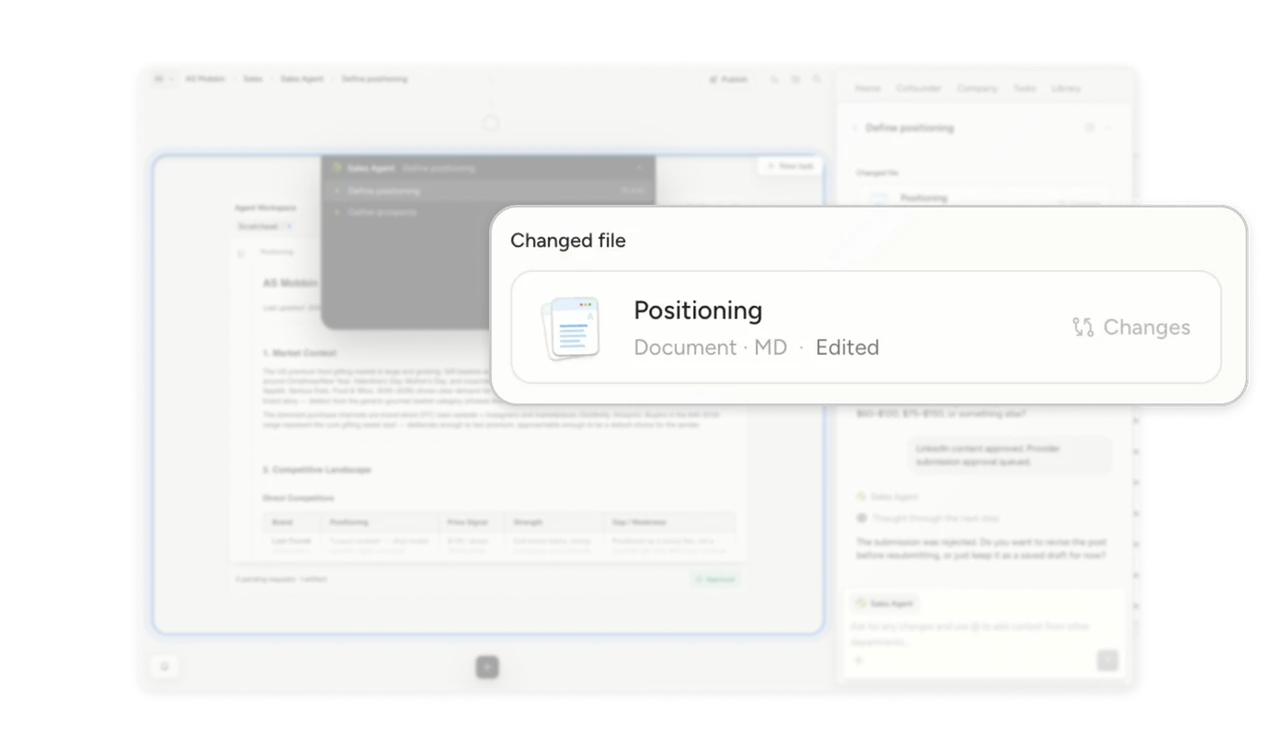
The panel opens with "Changed file: Positioning, Document, MD, Edited" and a Changes button, the agent's output tracked like a commit with the delta one click away. Git's mental model, what changed, view the diff, imported into knowledge work. Managers of AI employees review the delta, they do not re-read the whole document. Version-controlling agent output is what makes delegation reversible, and reversibility is what makes delegation safe.
Similar Breakdown Lessons