Meal Logging

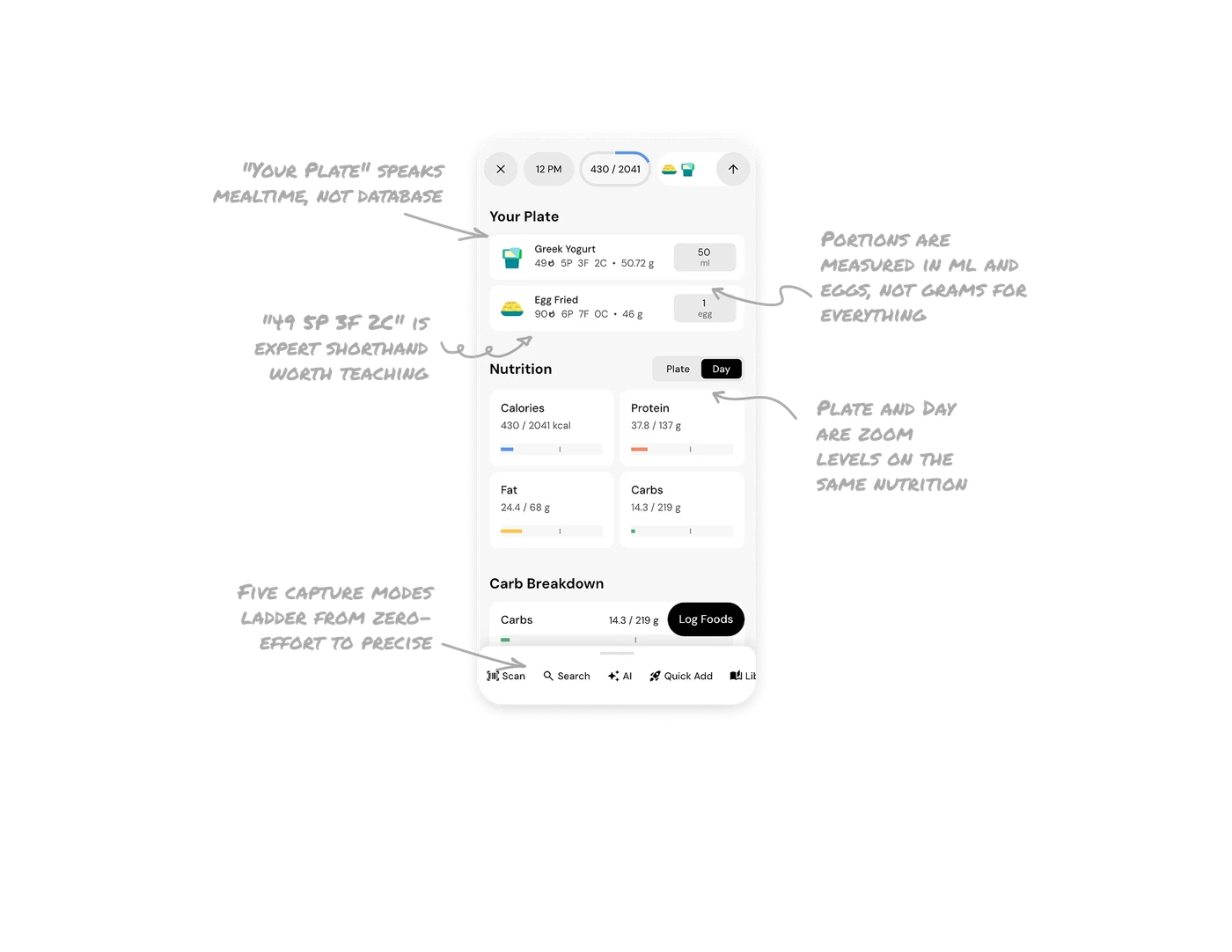
"Your Plate" speaks mealtime, not database
The logging section is titled "Your Plate," not "Entries" or "Logged items." The words frame the act as assembling a meal rather than filing records, which matters in a product users must return to three times a day for months. Domain language that mirrors the physical ritual lowers the emotional cost of a chore. Naming the container after the real-world object it represents is the cheapest warmth a utility app can add.
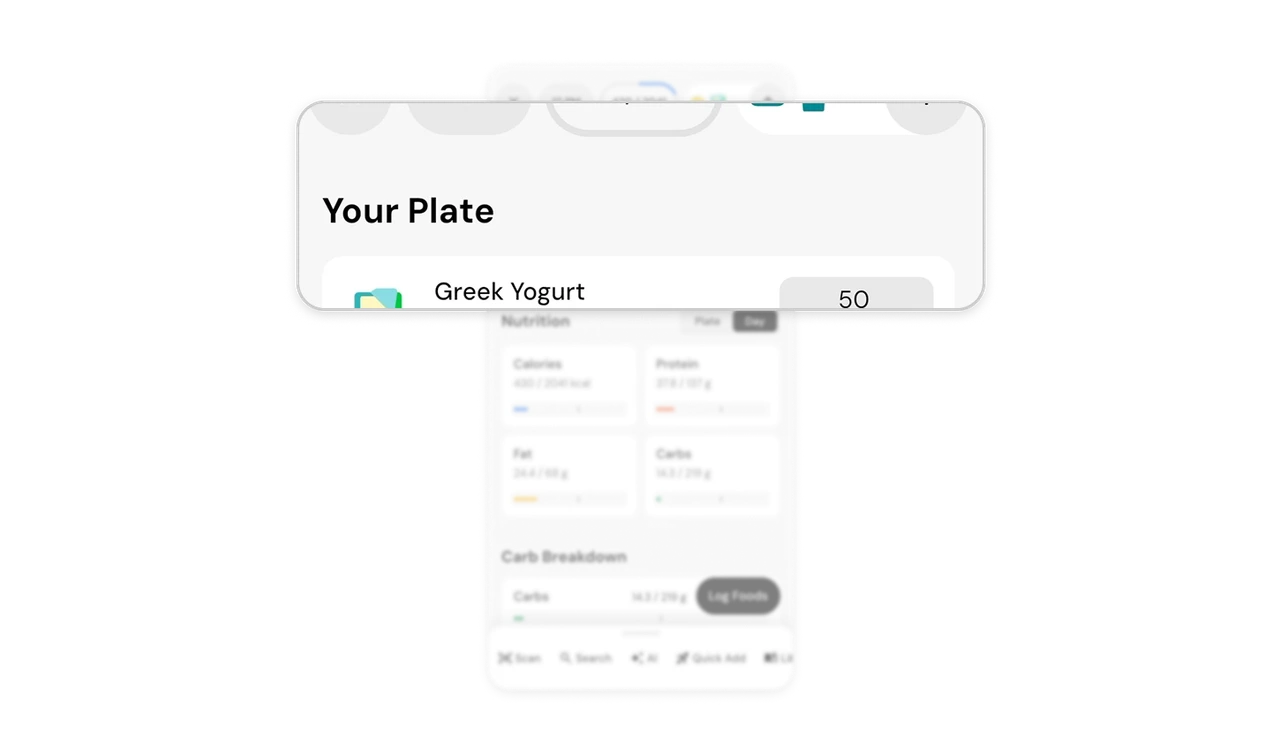
"49 5P 3F 2C" is expert shorthand worth teaching
Each food row compresses its nutrition into inline notation: a flame for calories, then protein, fat, and carbs as single letters. Dense, but learnable in a day, and after that a whole meal reads in one glance without a table. Daily-driver tools earn the right to teach notation: spelling out "protein: 5 grams" on every row would triple the height and halve the scan speed. Design the shorthand, teach it once, and reward the returning user forever.
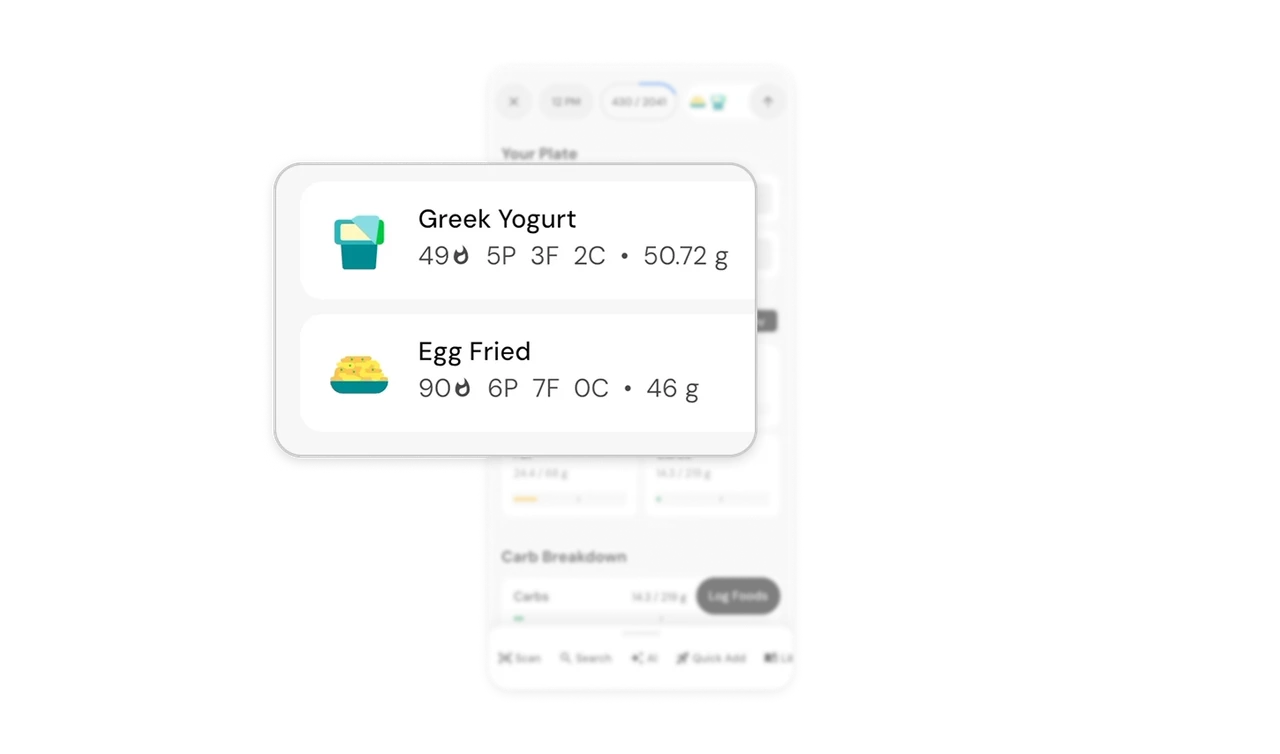
Portions are measured in ml and eggs, not grams for everything
Greek Yogurt is portioned as "50 ml," the fried egg as "1 egg." Each food carries its natural counting unit instead of forcing everything into grams. Nobody eats 46 grams of egg, they eat one egg, and unit friction is where food logging dies. Measure how humans measure, keep the gram equivalent as secondary detail. Matching the input unit to the kitchen reality is the difference between logging that lasts and logging that quits by Thursday.
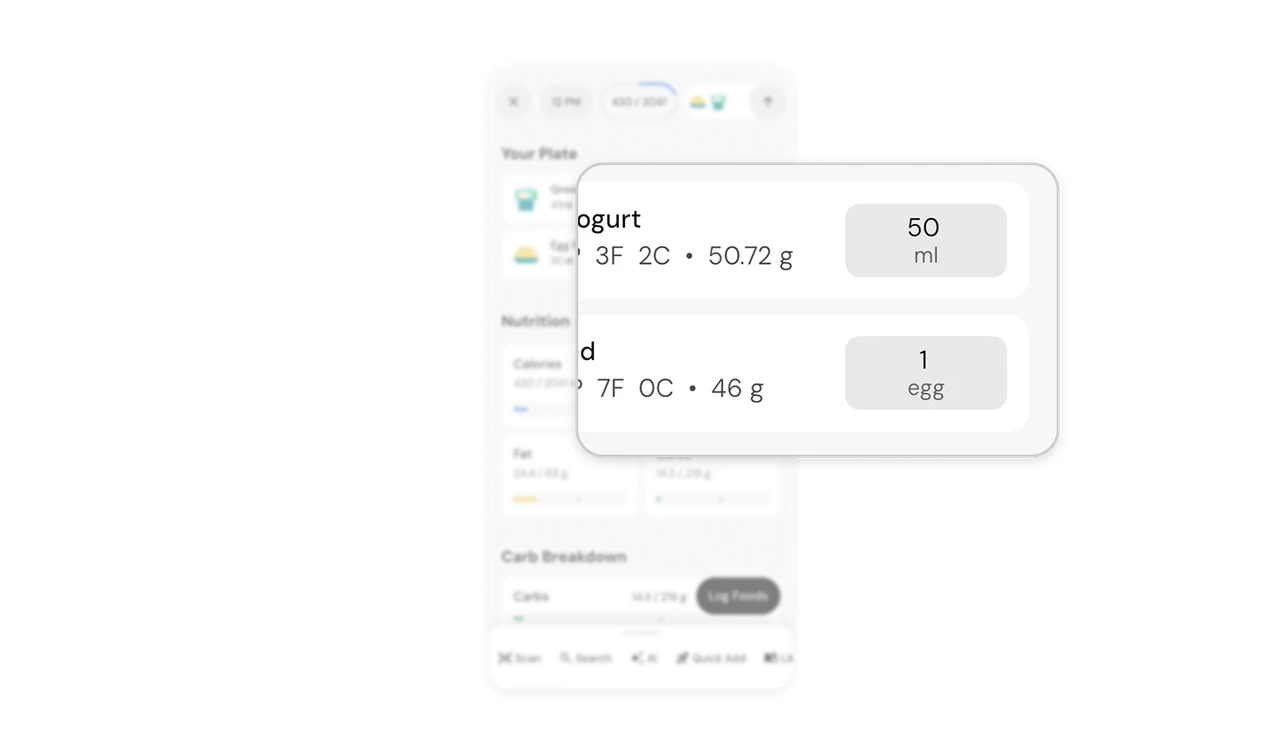
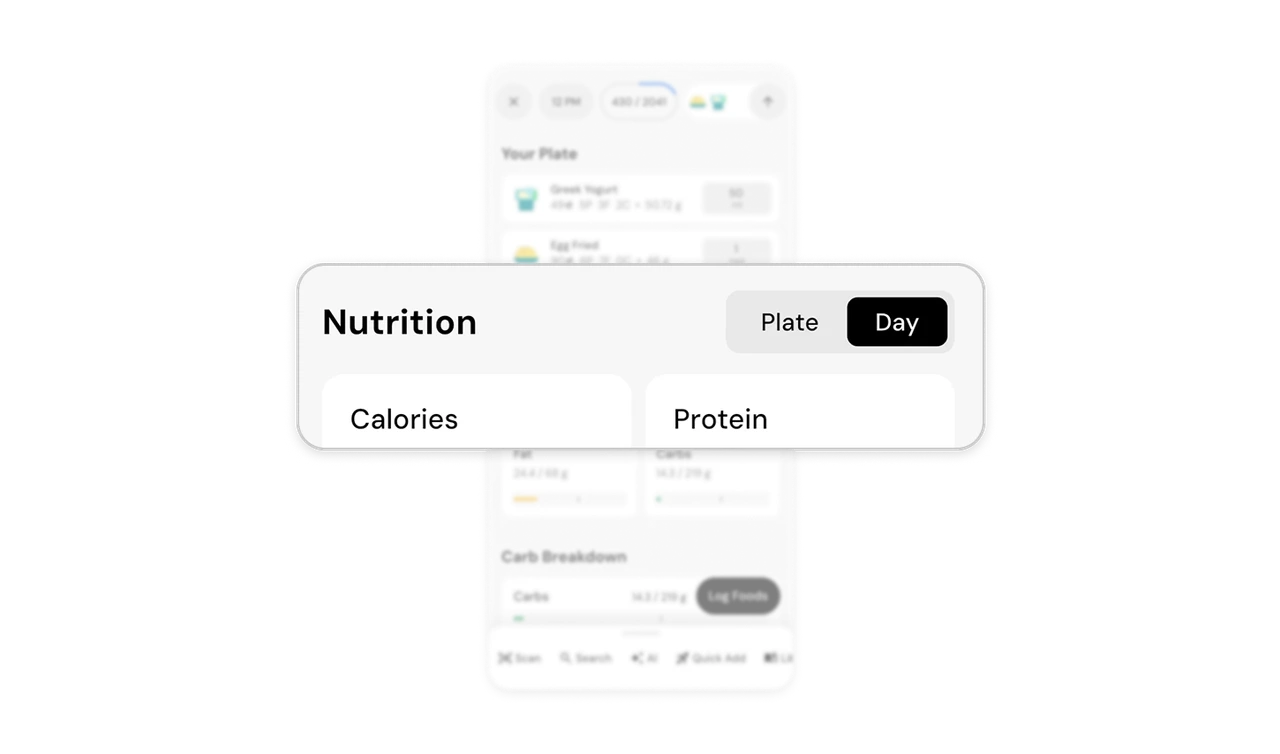
Plate and Day are zoom levels on the same nutrition
The Nutrition section carries a toggle: Plate shows what this meal contributes, Day shows where the whole day stands against targets. Two questions, "what am I eating now?" and "how am I doing overall?", share one set of cards, switched by one control. Offer the same metrics at both the event level and the aggregate level, in place. A meal is a decision, a day is a budget, and the toggle lets one screen serve both frames.
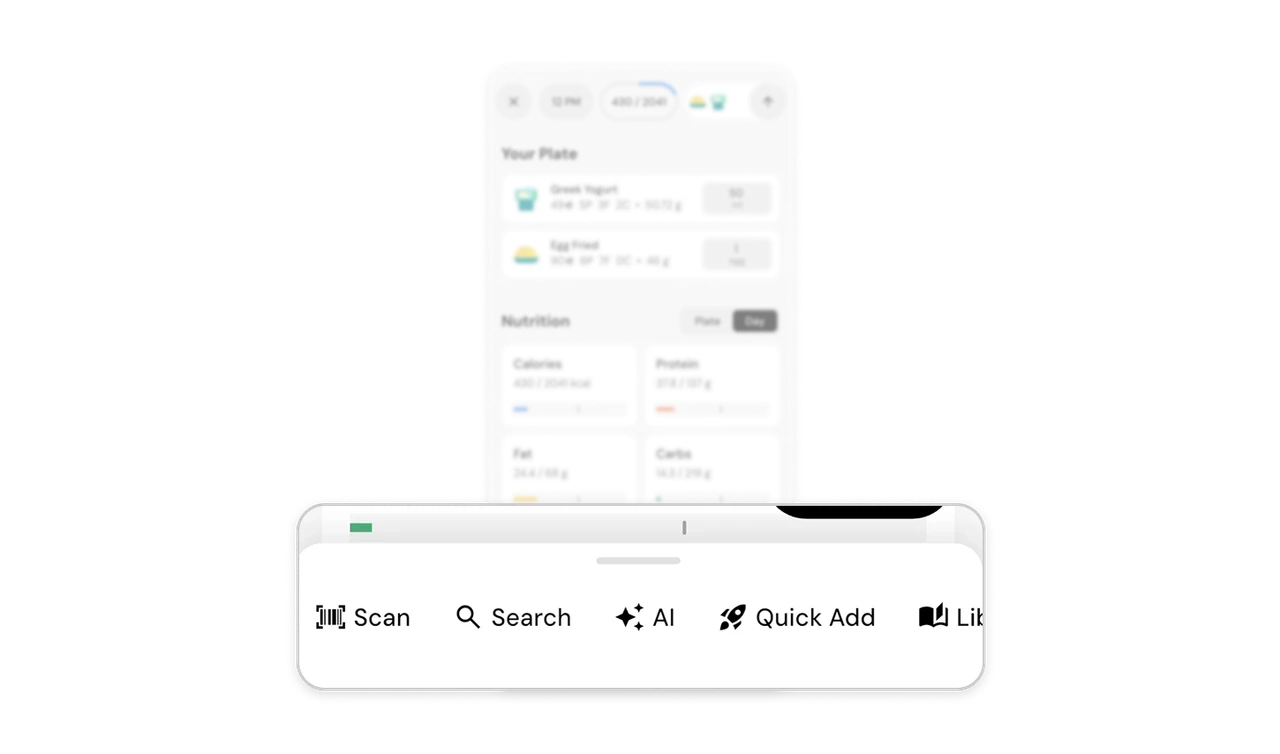
Five capture modes ladder from zero-effort to precise
The bottom bar offers Scan, Search, AI, Quick Add, and Library, five ways to log the same meal at different effort levels: barcode for packaged food, search for known items, AI for describing in words, Quick Add for bare numbers, Library for repeats. In habit products the biggest failure mode is not logging at all, so every friction level gets a lane. Meet the moment: sometimes users have ten seconds, sometimes a barcode, sometimes only a sentence.
Similar Breakdown Lessons